Bloating is the sign everyone expects. The new food sensitivities, the adult acne, the heavy periods, the 3pm fog, those are the ones nobody connects back to your gut. Here is what intestinal permeability actually looks like in women, and how to measure it instead of guessing.
The short answer
“Leaky gut,” clinically called intestinal hyperpermeability, is when the tight junctions holding your gut lining together loosen and allow bacterial fragments and undigested food proteins into the bloodstream. In women the signs reach well past digestion: new food sensitivities, acne, eczema, heavy periods, brain fog, anxiety, joint pain, and fatigue that sleep does not fix.
It is not a guess. Barrier integrity, gut inflammation and the microbial picture behind them are measurable through a stool panel or a blood panel, and they respond to treatment.


You are not imagining it.
You used to eat whatever you wanted. Now half your grocery list turns on you. Your skin started acting like it is fifteen again. Your periods got heavier, your sleep got lighter, and somewhere in there you stopped feeling like the sharp version of yourself.
Then you got bloodwork, and it came back normal.
Normal does not equal optimal. A standard panel is built to catch disease, not to tell you whether the barrier between your gut and your bloodstream is doing its job. And when that barrier stops doing its job, the symptoms rarely announce themselves as gut symptoms. That is exactly why this gets missed for years.
What “leaky gut” actually means
Your gut lining is one cell thick. One.
Laid flat, it covers roughly 30 to 40 square meters, about the floor space of a studio apartment. (The tennis court version you have read elsewhere is off by about seven times. It is a good line and a bad number.) Even at the honest size, it is the largest surface where the outside world touches the inside of you, and it has an impossible job: absorb what you need, keep out what you do not.
The cells doing that job are called enterocytes, and they are stitched together by protein structures called tight junctions. Think of a zipper. When the zipper holds, nutrients pass through the controlled route and everything else stays in the tube where it belongs.
Chronic stress, dysbiosis, alcohol, NSAIDs, antibiotics, infections and an ultra-processed diet all loosen that zipper. When it loosens, bacterial fragments, endotoxin, and partially digested food proteins slip between the cells instead of through them, straight into circulation.
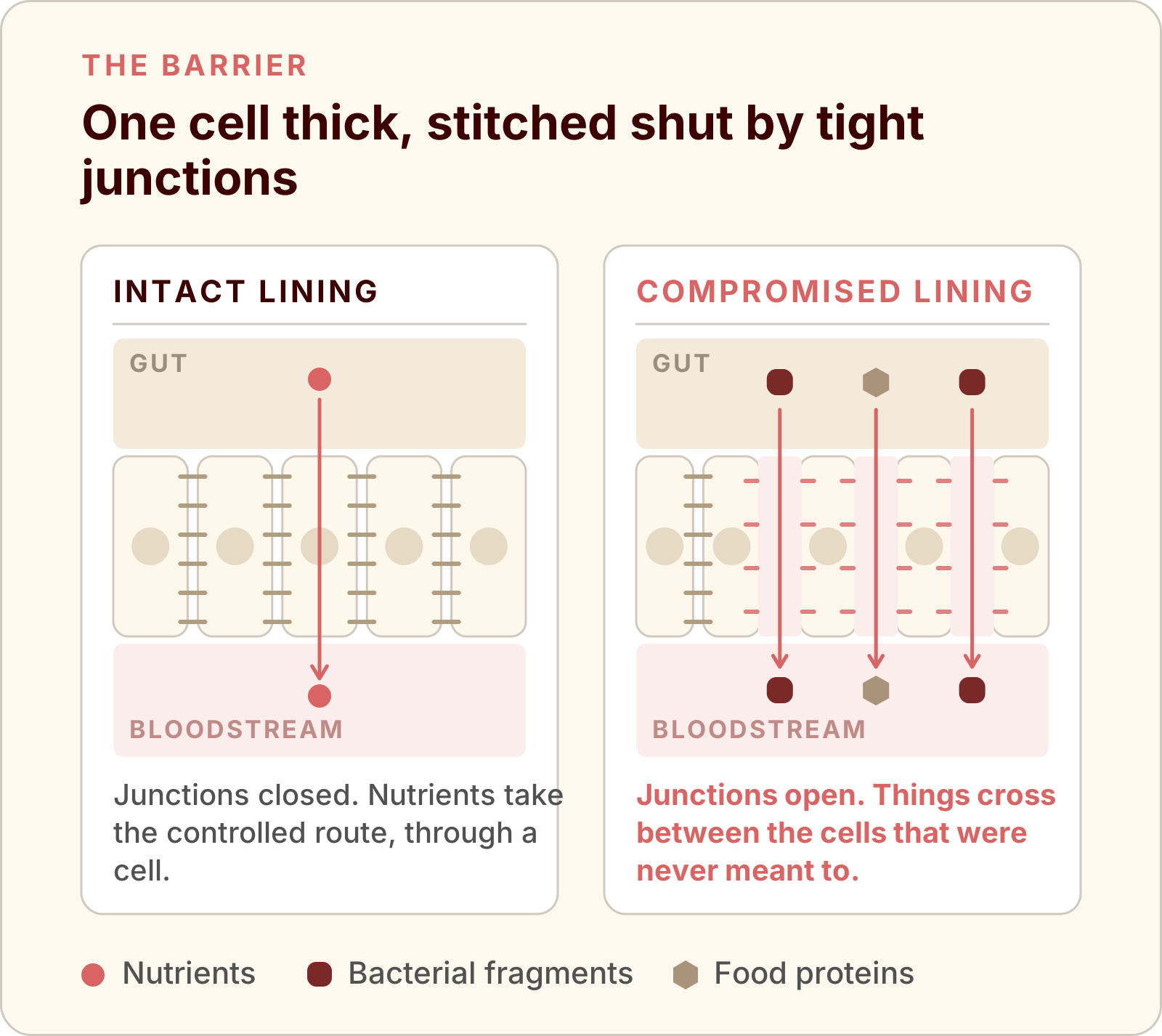
Your immune system has never met these things in the bloodstream before. It responds the way it responds to a threat: inflammation.
And here is the part that explains everything downstream. Your gut is connected to the rest of you by the gut-liver axis, the lymphatic system, and the vagus nerve. Inflammation that starts at the barrier does not stay at the barrier. It travels.
This is not a fringe idea. Intestinal permeability has a serious and growing research literature behind it, and it is associated with conditions that conventional medicine does not usually connect back to the gut. What it does not have is a tidy ICD-10 code, which is a different problem, and one about adoption rather than evidence.
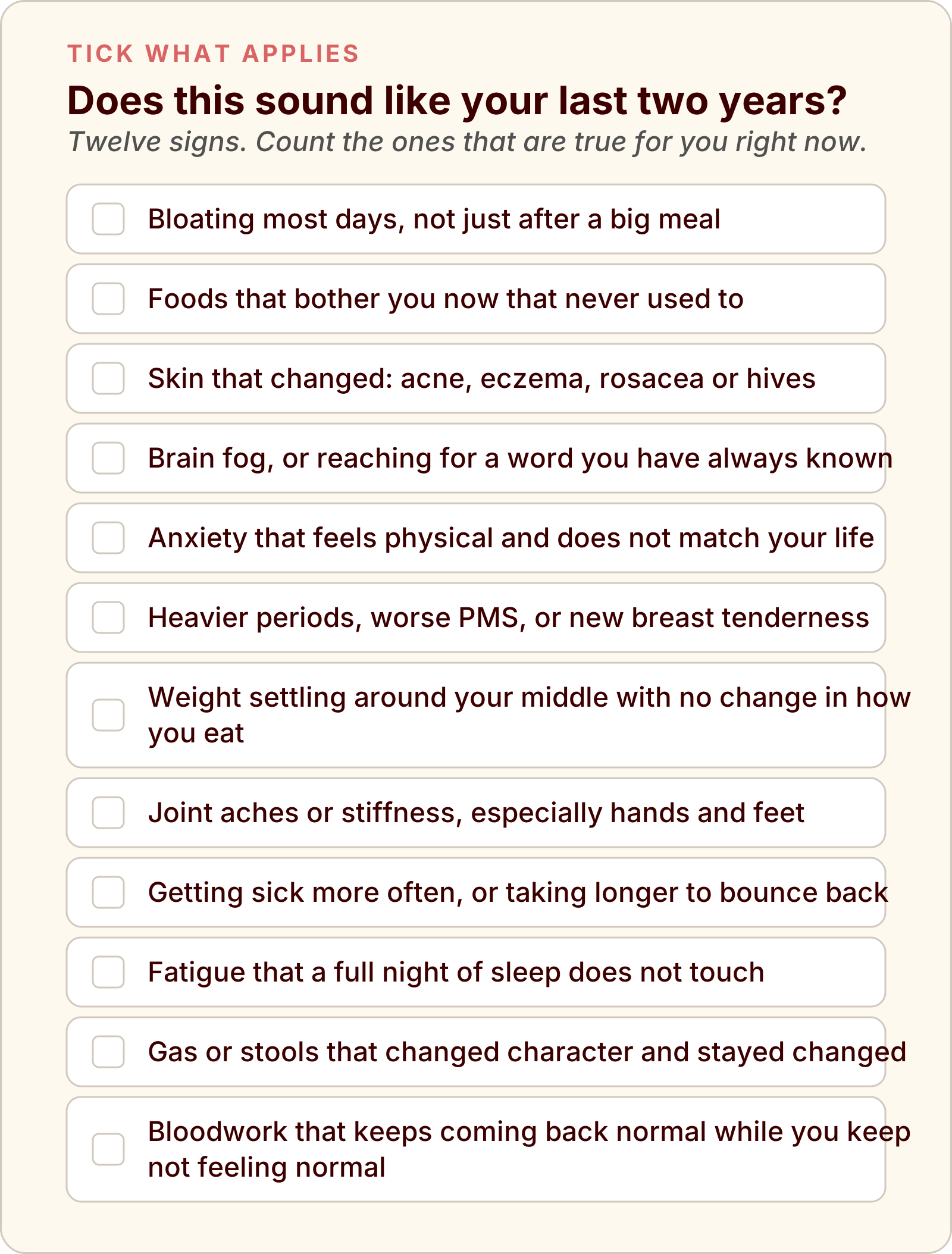
Does this sound like your last two years?
Tick what applies, then read the tiers below.
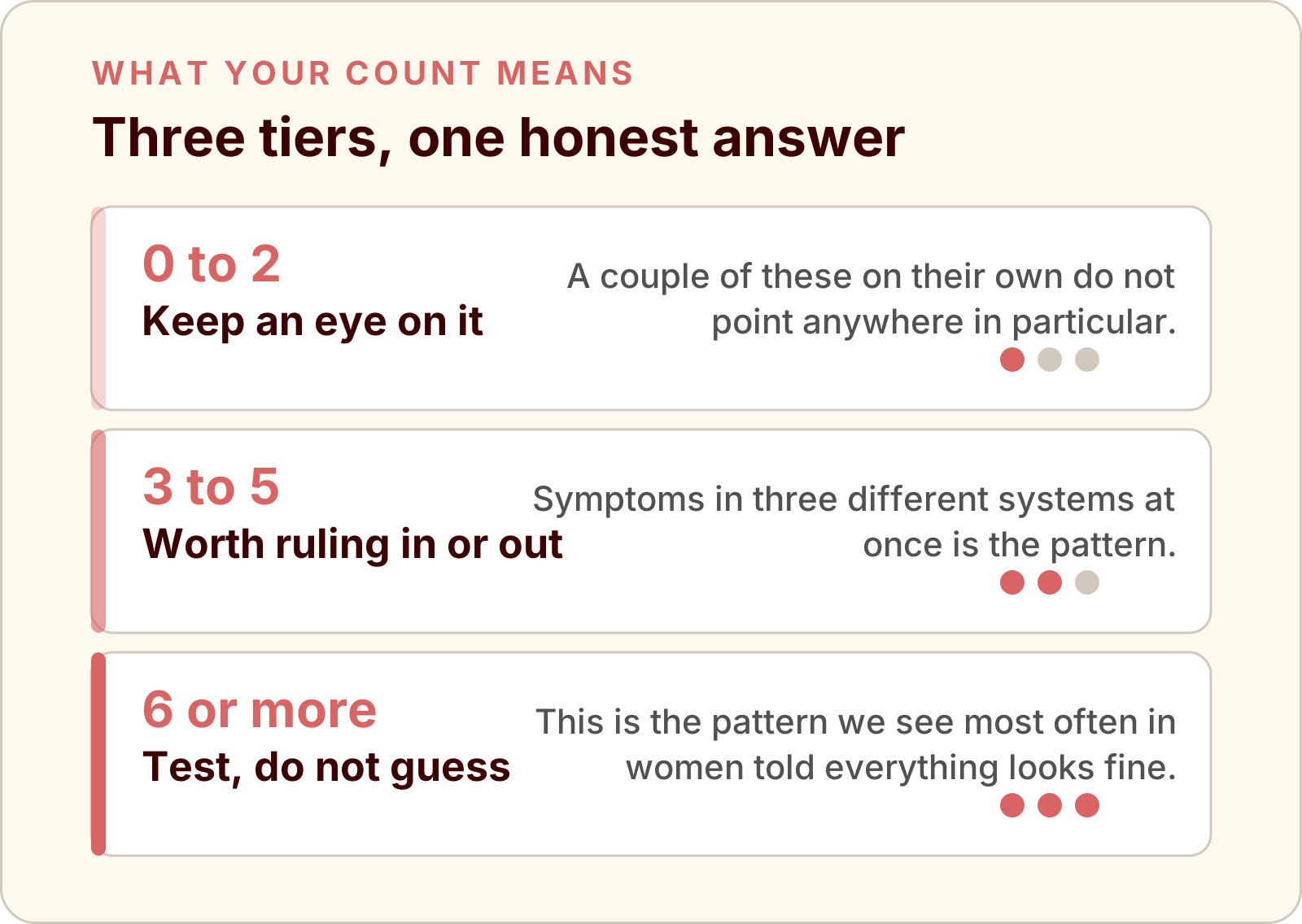
0 to 2 checked: A couple of these on their own do not point anywhere in particular. Keep an eye on whether the list grows, and if it does, come back to this page.
3 to 5 checked: This is the range where a barrier problem becomes worth ruling in or out. Symptoms in three different systems at once (gut, skin, mood, hormones) is the pattern, and it is not something a symptom list can settle on its own.
6 or more checked: This is the pattern we see most often in women who have been told everything looks fine. Six or more across this many systems is not a coincidence and it is not stress. It is worth measuring. Test, don’t guess.
Take the free 3-minute evaluation
Nine places this shows up
The reason leaky gut goes unnoticed for years is that its symptoms are nonspecific and they scatter. They look like nine unrelated problems until you see them in one place.
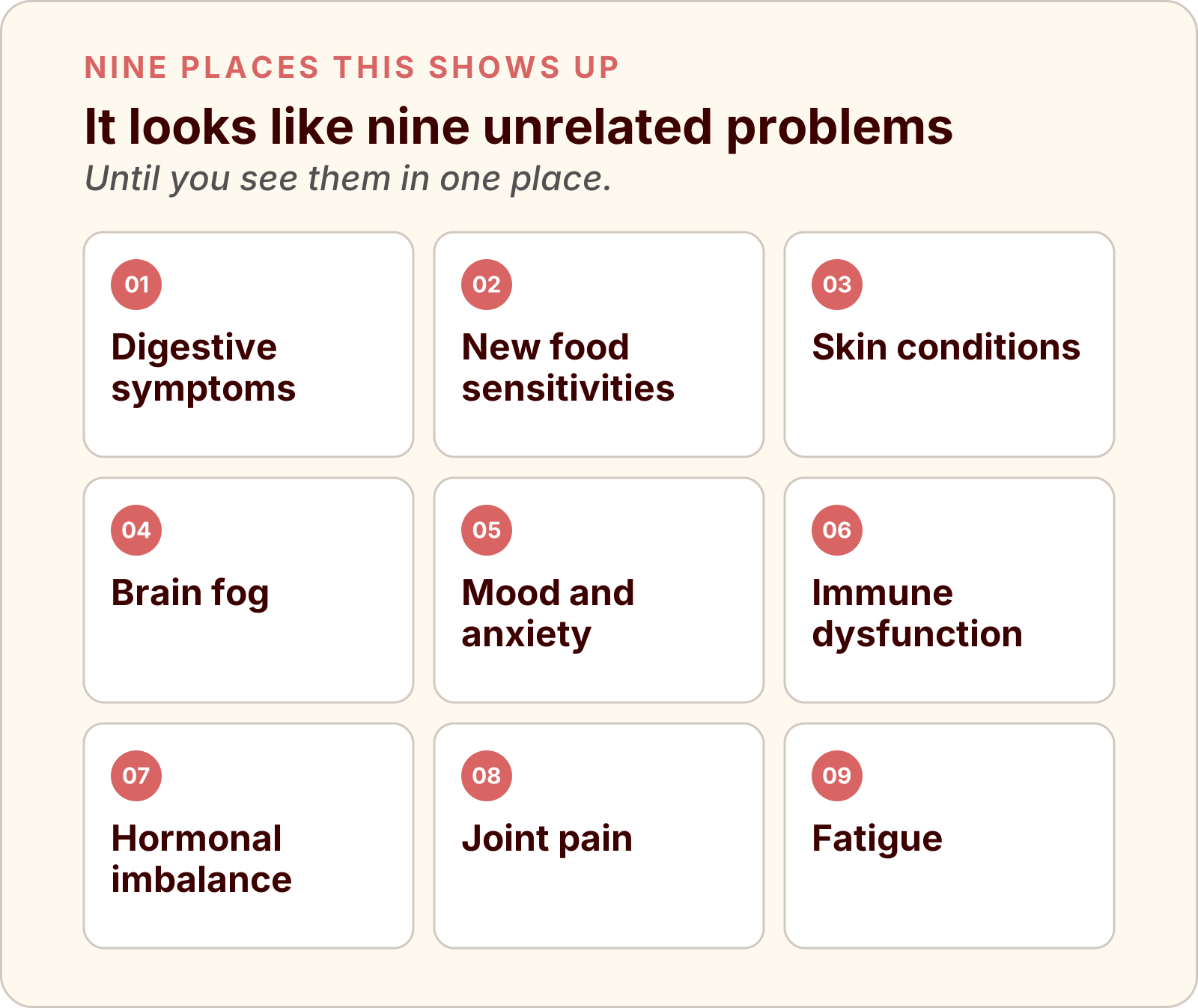
01. Digestive symptoms. Bloating most days, gas that is excessive or foul, cramping, alternating constipation and loose stools, reflux, feeling full for hours, nausea with no clear cause.
02. New food sensitivities. A reaction list that keeps growing. Gluten, dairy, eggs, corn, soy and high-FODMAP foods are the usual suspects, but yours will be specific to you.
03. Skin conditions. Adult or cystic acne, eczema, rosacea, psoriasis, chronic hives. The gut-skin axis is one of the better-documented connections in the literature.
04. Brain fog. Difficulty concentrating, memory lapses, word-finding trouble, and mental fatigue that rest does not clear.
05. Mood and anxiety. Anxiety that feels physical, low mood, a lowered threshold for stress, and mood that tracks with what you ate.
06. Immune dysfunction. Getting sick more often, slower recovery, worsening allergies, elevated CRP or ESR, and in some women the first signals of autoimmunity.
07. Hormonal imbalance. Heavier periods, worse PMS, breast tenderness, midsection weight, and thyroid symptoms. The connection almost nobody explains.
08. Joint pain. Aching or stiffness, often small joints in the hands and feet, frequently written off as fibromyalgia or aging without anyone looking at the gut.
09. Fatigue. Tired after a full night of sleep. Chronic immune activation is metabolically expensive, and the energy has to come from somewhere.
The signs that actually give it away
Any one of those nine has a dozen possible explanations. It is the combination that means something, and three in particular carry the most diagnostic weight.
New food sensitivities are the loudest signal
If there is one sign that makes us think barrier before anything else, it is this one: a list of food reactions that was not there five years ago.
The mechanism is simple. When intact food proteins cross the barrier instead of being broken down and absorbed properly, your immune system meets them somewhere it has never met them before, and it makes antibodies. Foods that were fine your whole life start producing bloating, fog, fatigue, or a skin flare within a day.

That is not you getting old and it is not you getting fussy. That is an immune system that has had contact it was not supposed to have.
Your skin is reporting on your gut
The gut-skin axis is real and it is well studied. Dysbiosis and a permeable barrier drive systemic inflammation, and skin is where systemic inflammation is easiest to see.

Acne, particularly cystic, adult-onset, or hormonal-pattern
Eczema, chronic and itchy
Rosacea, which is most strongly linked in the research to small intestinal bacterial overgrowth and dysbiosis (H. pylori is one possible contributor, though that evidence is mixed)
Psoriasis, an autoimmune condition with a well-documented gut connection
Chronic hives, immune reactivity to gut-derived triggers
If you have been treating your skin exclusively from the outside for two years and it keeps coming back, the outside was never where it was coming from.
Fog, mood and the serotonin story (told correctly)
Your gut makes roughly 90% of your body’s serotonin. That is true, and it gets misused constantly.
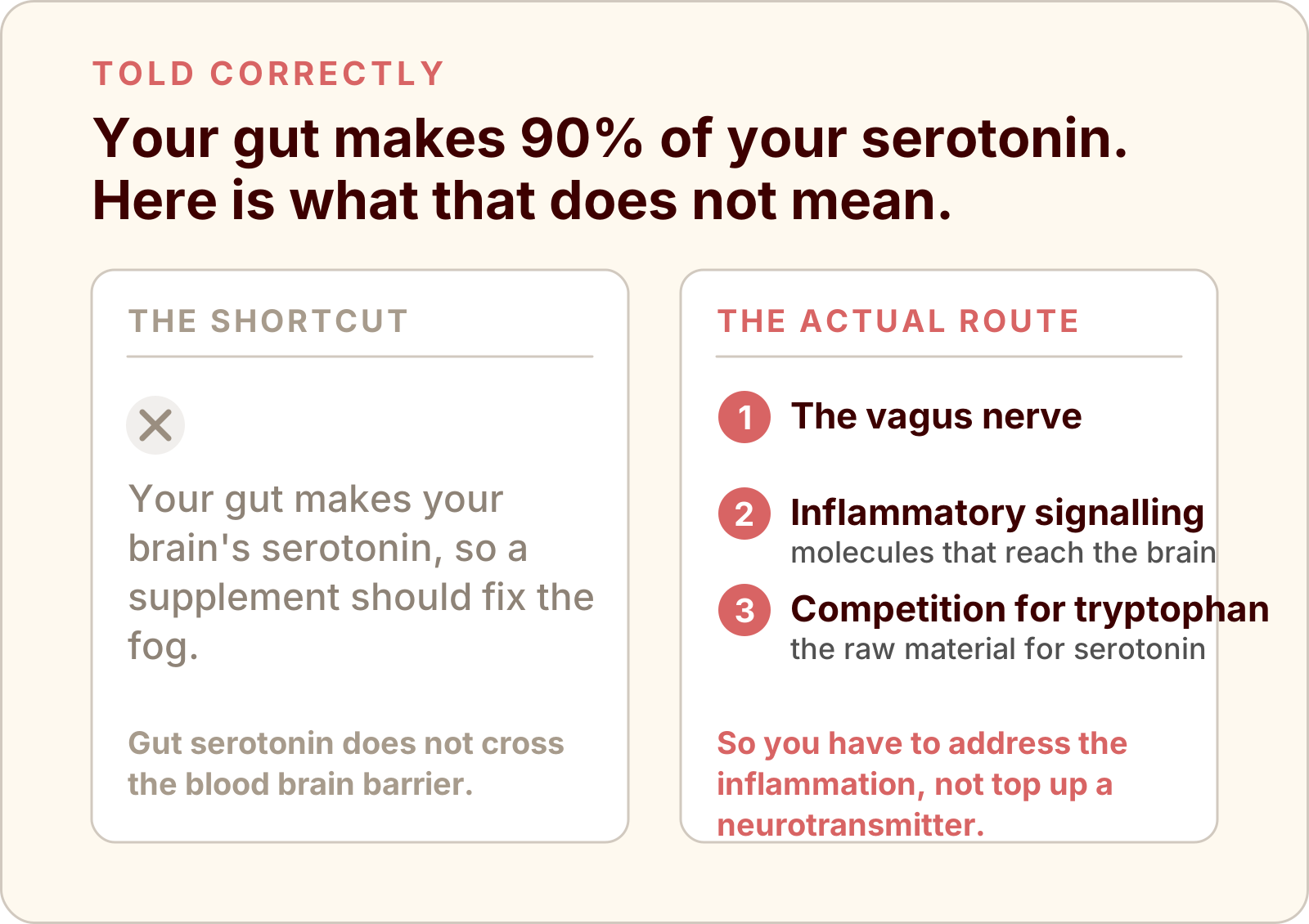
Here is the accurate version: gut serotonin does not cross the blood-brain barrier, so it is not directly topping up your brain. What actually connects an inflamed gut to a foggy head is the vagus nerve, inflammatory signaling molecules that do reach the brain, and competition for the raw materials (tryptophan) your brain needs to make its own serotonin.

The distinction matters because it changes what fixes it. If the story were “your gut makes your brain’s serotonin,” a supplement would solve it. Because the real route is inflammation and signaling, you have to address the inflammation.
Roughly 70% of your immune cells live in and around the gut lining. When they are chronically responding to things that should never have crossed, you get frequent illness, slower recovery, allergies that keep escalating, and low-grade inflammation on labs (elevated CRP or ESR) with no obvious source.
Autoimmunity sits at the far end of this. Alessio Fasano’s model describes three conditions that have to line up: a genetic susceptibility, an environmental trigger, and increased intestinal permeability. You cannot change the first. The third is the one that is both modifiable and measurable, which is precisely why it is worth knowing your number.

The hormone connection nobody explains to you
This is the section your doctor never got to, and it is the reason this post exists.
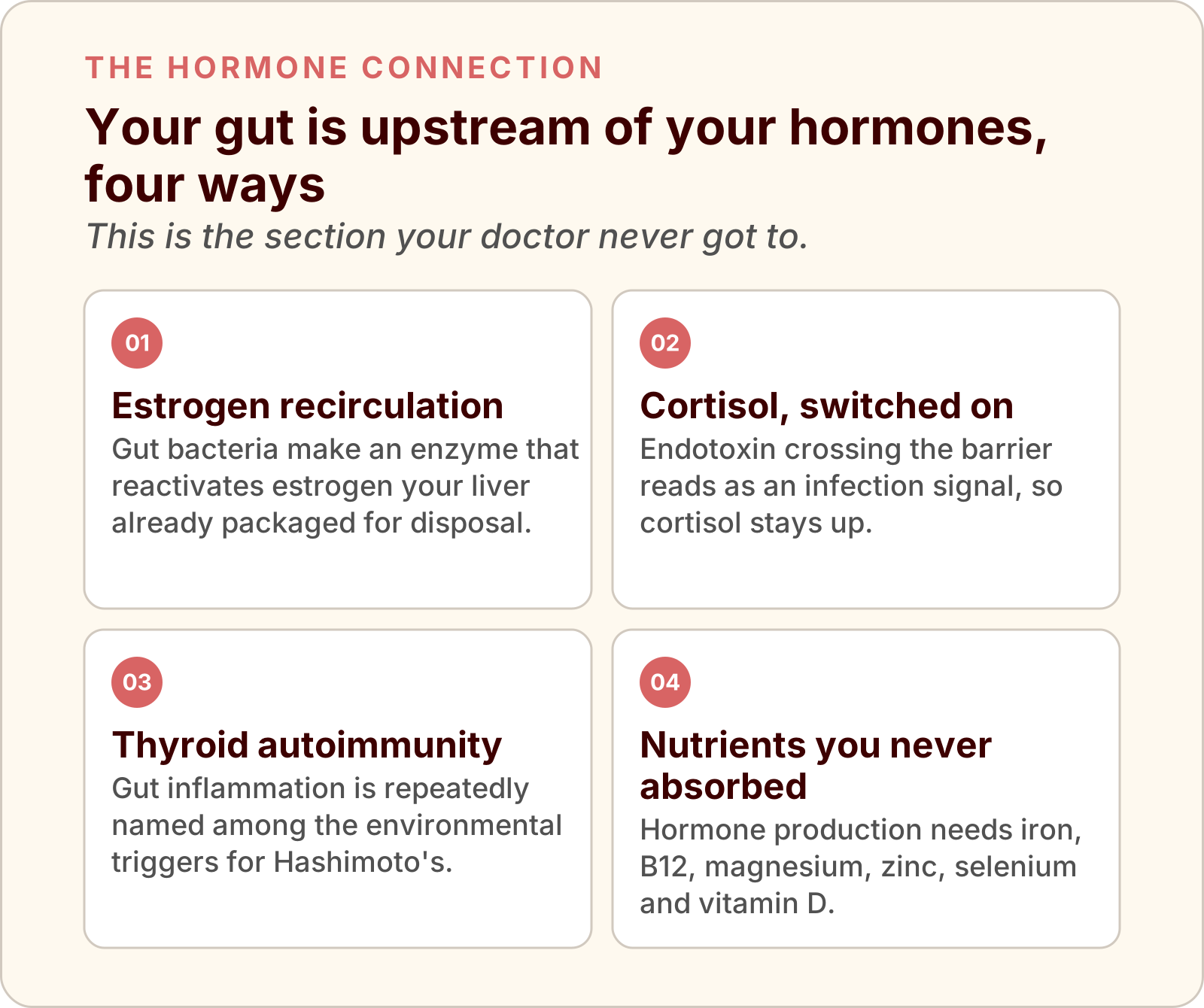
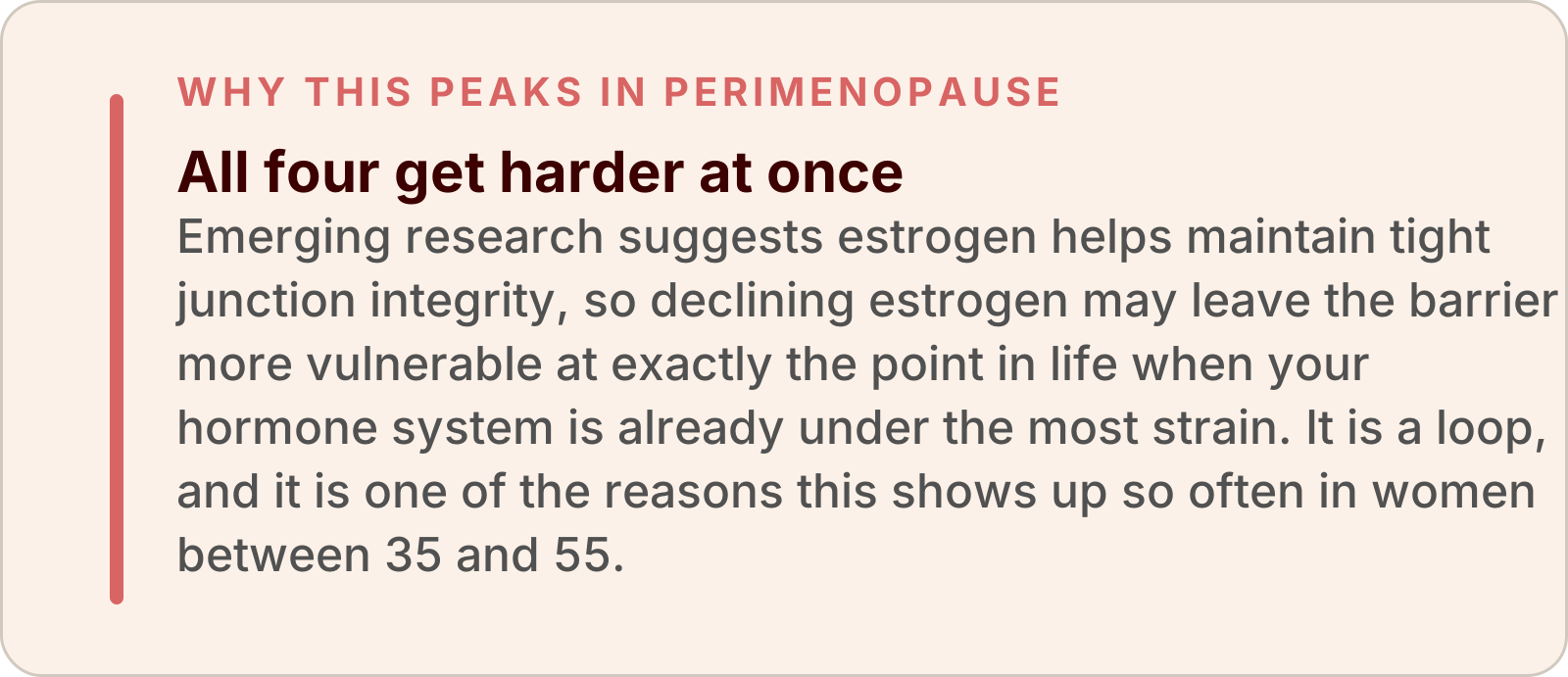
Your gut is not downstream of your hormones. It is upstream of them, through four separate mechanisms.
1. Your gut decides how much estrogen you recirculate
Your liver does the work of packaging used estrogen for disposal. It attaches a molecular tag (conjugation), sends it into bile, and bile carries it into the gut to leave the body.
Then a group of gut bacteria collectively called the estrobolome gets a vote. Some of them produce an enzyme called beta-glucuronidase, which cuts that tag right back off. The estrogen your body had already decided to eliminate gets reactivated and reabsorbed into circulation.
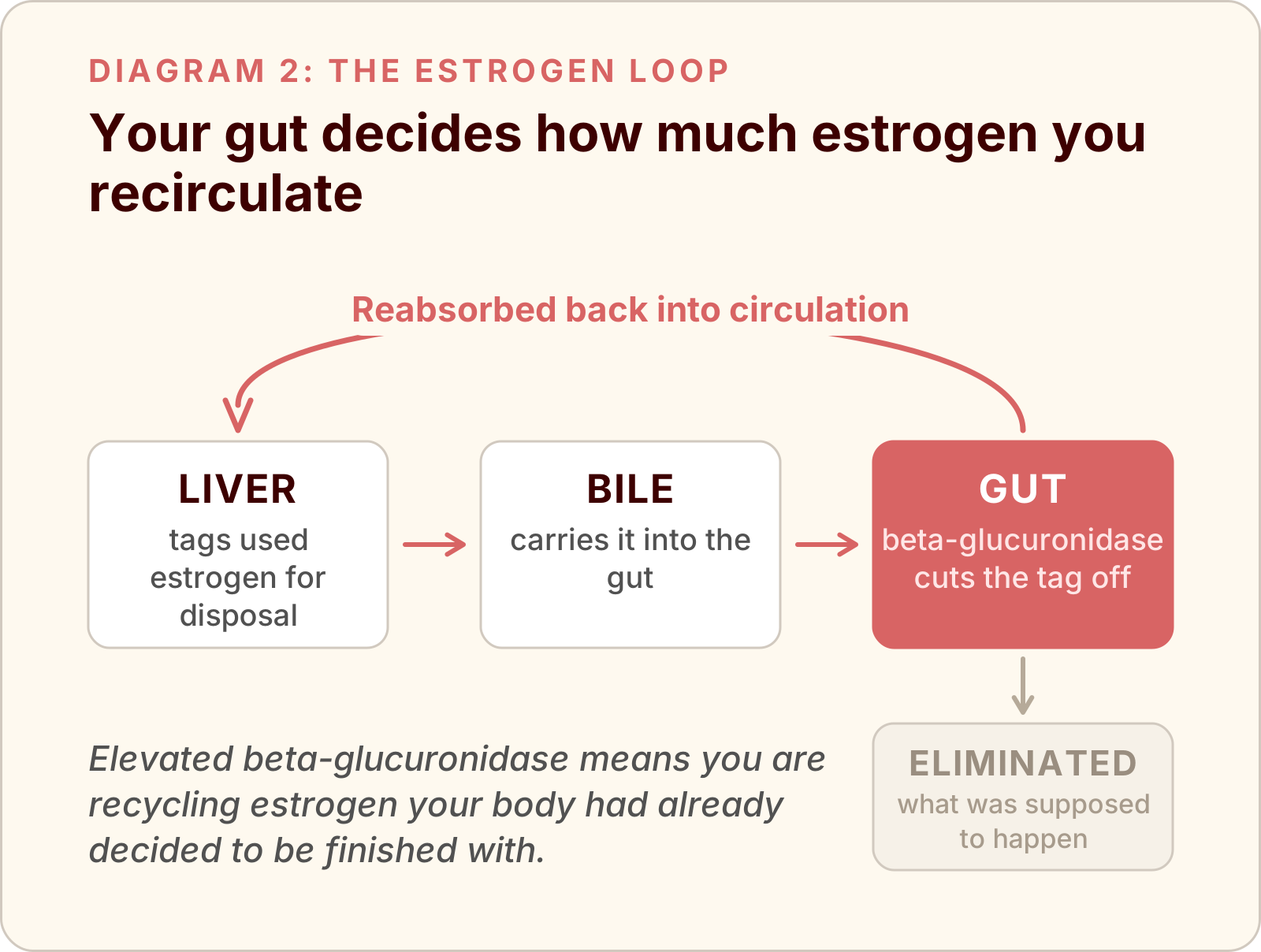
Elevated beta-glucuronidase means you are recycling estrogen you were supposed to be finished with. Downstream, that looks like heavier periods, worse PMS, breast tenderness, bloating, and weight that will not move no matter what you do with food.
It is measurable. It is on the stool panel. And it is the reason so many women get put on a hormone protocol that does not work, because the hormones were never the origin.
2. Endotoxin keeps your cortisol switched on
When the barrier is open, LPS (lipopolysaccharide, a fragment of the outer wall of certain gut bacteria) enters circulation. Your body treats circulating LPS as an infection signal and raises cortisol.
A chronically permeable gut is therefore a chronic cortisol stimulus, running quietly in the background. Which means you can do every stress-management practice correctly and still have a cortisol problem, because the driver was never psychological.
3. Gut inflammation is a leading environmental trigger for thyroid autoimmunity
Hashimoto’s is the most common cause of hypothyroidism in women, and gut inflammation is repeatedly named among its environmental triggers. One proposed mechanism is molecular mimicry, where the immune system’s response to a gut-derived antigen cross-reacts with thyroid tissue. That mechanism is still being worked out, but the association between barrier integrity and thyroid autoimmunity is consistent across the literature.
4. You cannot build hormones out of nutrients you did not absorb
Hormone production is not free. It requires iron, B12, magnesium, zinc, selenium and vitamin D, and a compromised, inflamed gut lining absorbs all of them less well.
This is the quiet one, because it does not show up as a gut symptom at all. It shows up as fatigue, hair shedding, poor recovery and a thyroid panel that drifts, in a woman who is eating well and cannot understand why it is not landing. Hormones are downstream of nutrients, and nutrients are downstream of absorption.

What actually causes it
Nothing on this list is exotic. That is rather the point. Most women arrive here through some combination of four or five of these running for years, not through one dramatic event.

Chronic stress. Cortisol directly degrades tight junction integrity. A nervous system that never gets the all-clear keeps the barrier under pressure. The most underestimated driver on this list.
Dysbiosis. When the microbial balance tips, opportunistic bacteria and yeast proliferate and produce compounds that erode the gut lining from the inside.
NSAIDs. Ibuprofen and naproxen measurably increase intestinal permeability, even short term. Regular use for cycle pain or training soreness matters more than most women realize.
Antibiotics. Necessary when they are necessary. They also clear beneficial species along with the target, which opens the door to dysbiosis and secondary permeability.

Alcohol. Increases permeability directly and shifts the microbiome. This is dose dependent, and the nightly glass counts as a dose.
Ultra-processed, low-fiber eating. Beneficial bacteria eat prebiotic fiber. Without it they thin out, and the organisms that thrive on what is left are not the ones you want.
Gut infections. H. pylori, parasites, and bacterial overgrowth drive permeability while they are active. This is one of the reasons we test rather than assume.
Gluten. Gliadin triggers the release of zonulin, the protein that opens tight junctions. How much that matters outside celiac disease is still being worked out and appears to vary a lot from woman to woman.
What leaky gut is not
We would rather tell you this ourselves than have you find it in a comment section.
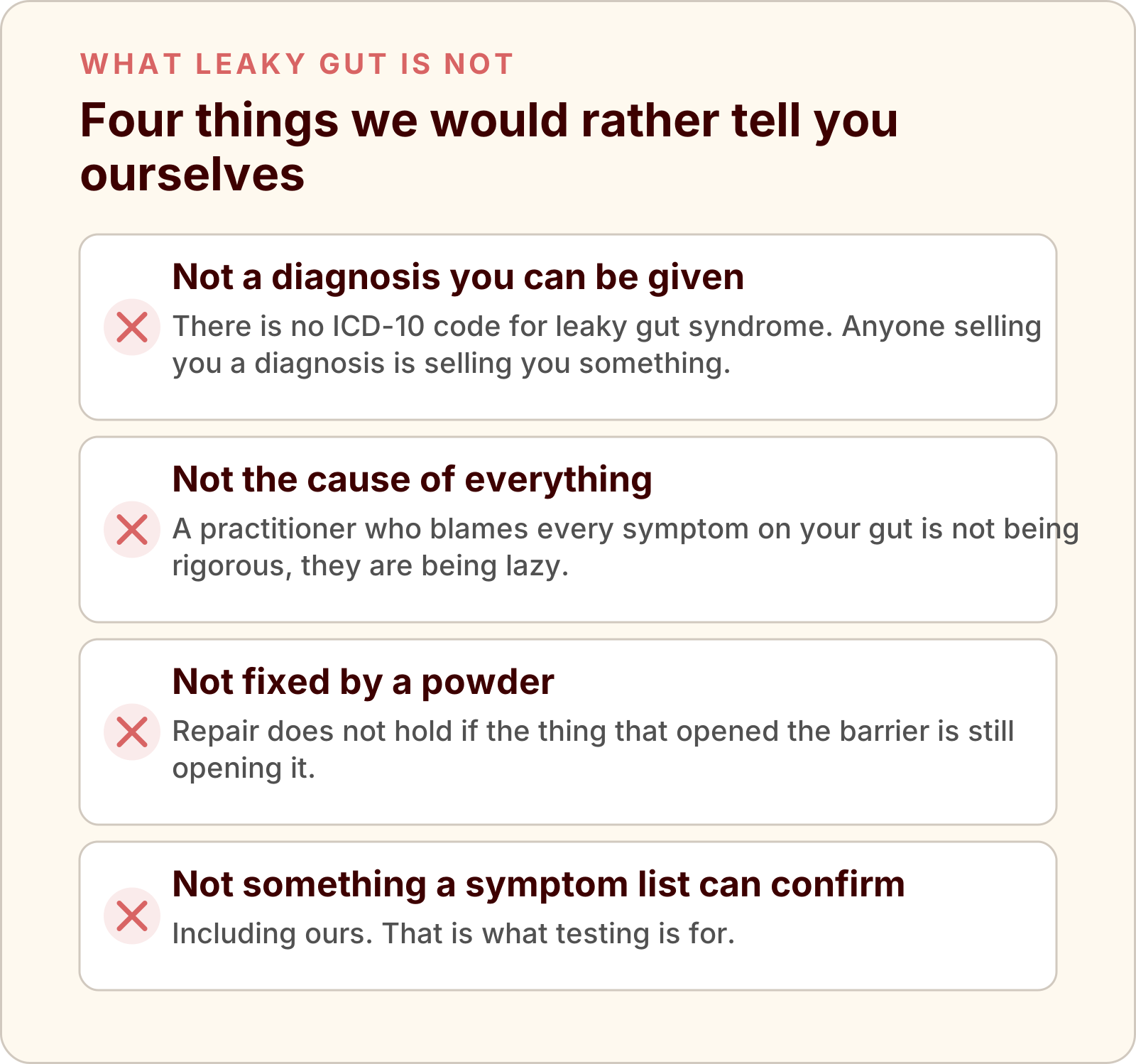
It is not a diagnosis you can be given. There is no ICD-10 code for leaky gut syndrome. What exists are measurable markers of barrier function, inflammation and microbial balance. Those are real, and they are what we work from. Anyone selling you a diagnosis is selling you something.
It is not the cause of everything. It is genuinely associated with a wide range of conditions. That does not make it the origin of all of them, and a practitioner who blames every symptom you have on your gut is not being rigorous, they are being lazy.
It is not fixed by a powder. The supplement aisle sells the repair phase as though it were the whole protocol. Repair does not hold if the thing that opened the barrier is still opening it.
And it is not something a symptom list can confirm. Including ours. Everything above tells you whether this is worth investigating. It cannot tell you what is actually happening in your gut. That is what testing is for.

How to test for leaky gut
There is no single “leaky gut test,” and you should be skeptical of anyone who tells you otherwise. What exists is a set of markers that, read together, tell you whether your barrier is compromised, how inflamed you are, and what is driving it.
Here is what is actually available and what each one is genuinely for.
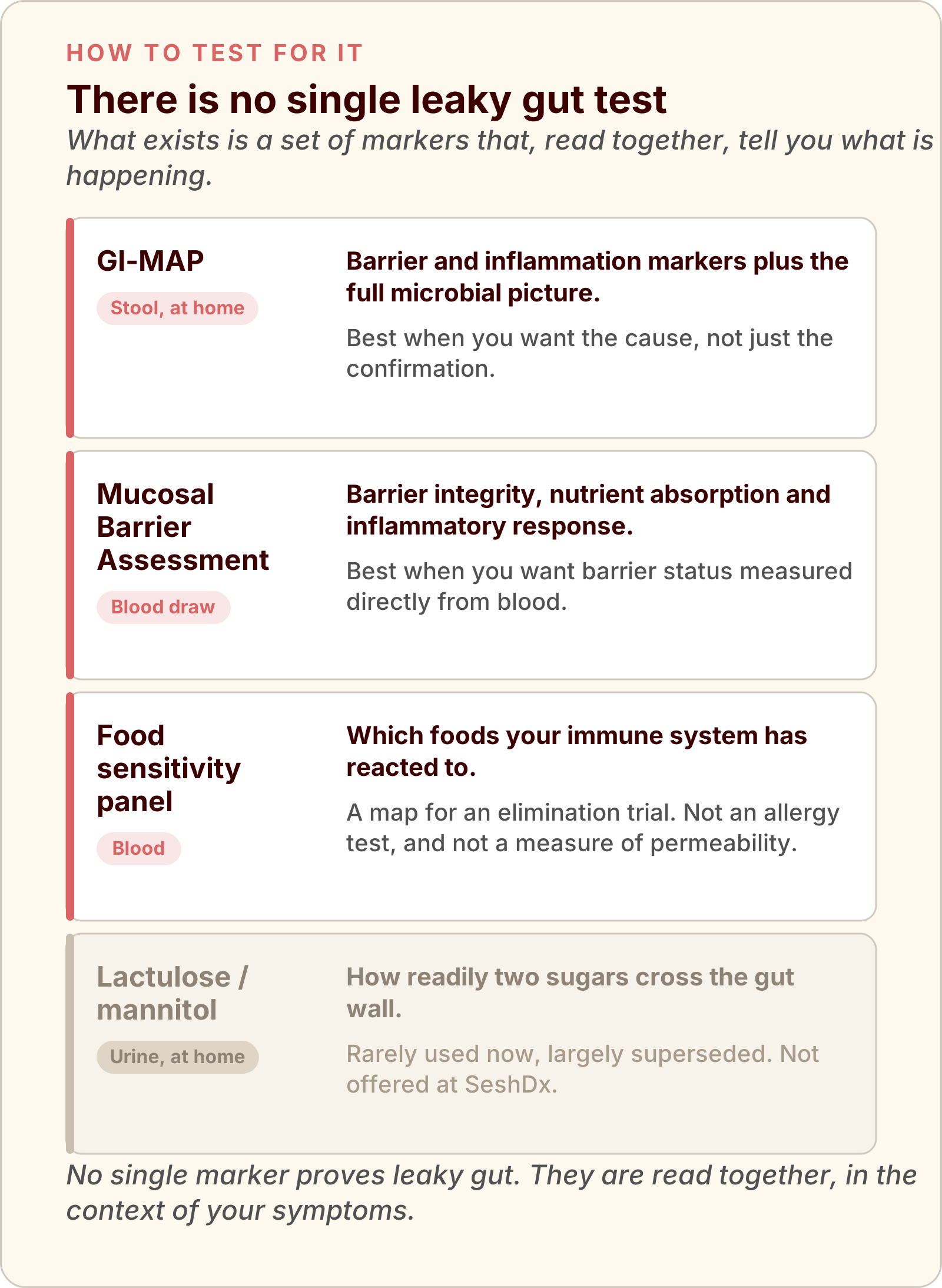
GI-MAP
A stool sample you collect at home. It reads barrier and inflammation markers plus the full microbial picture: what is there, what should not be, and what it is producing. Best when you want the cause, not just the confirmation. Limitation: it does not measure absorption in blood.
Mucosal Barrier Assessment
A blood draw at a local location. It measures barrier integrity, nutrient absorption and inflammatory response directly in blood. Best when you want barrier status measured directly, from blood rather than stool. Limitation: it does not identify which organisms are driving it.
Food Sensitivity Test
A blood panel showing which foods your immune system has reacted to. Best when you have a growing reaction list and need a starting point for an elimination trial. Limitation: it is not an allergy test, and it is not a measure of permeability.
Lactulose / mannitol
A urine test measuring how readily two sugars cross the gut wall. Rarely used now, largely superseded, and not offered at SeshDx. Limitation: it tells you permeability is present, not why.
What we are actually looking at
The markers below are the ones that carry the weight. No single one of them proves leaky gut. They are read together, in the context of your symptoms, which is the entire reason results come with a review rather than a PDF and good luck.
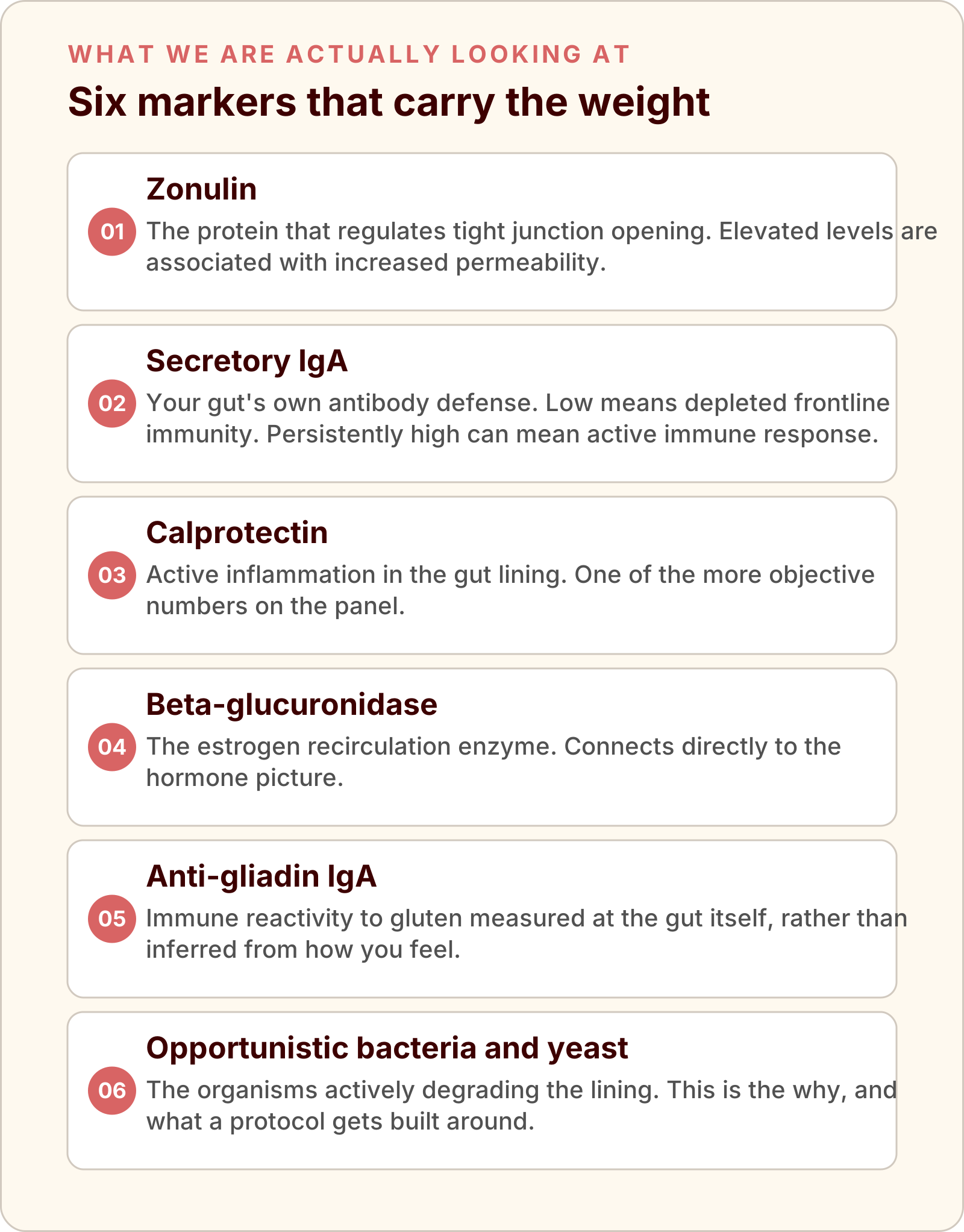
Zonulin. The protein that regulates tight junction opening. Elevated levels are associated with increased permeability.
Secretory IgA (sIgA). Your gut’s own antibody defense. Low sIgA means depleted frontline immunity. Persistently high can mean active immune response.
Calprotectin. Active inflammation in the gut lining. One of the more objective numbers on the panel.
Beta-glucuronidase. The estrogen recirculation enzyme. Elevated levels connect directly to the hormone picture above.
Anti-gliadin IgA. Immune reactivity to gluten measured at the gut itself, rather than inferred from how you feel.
Opportunistic bacteria and yeast. The organisms actively degrading the lining. This is the “why,” and it is what a protocol gets built around.
A note on IgG food panels, because they are everywhere. They map which foods your immune system has encountered and reacted to. That is useful as a starting point for a structured elimination trial. It is not an allergy test, the major allergy bodies do not endorse it as a diagnostic, and it does not measure permeability. A long reaction list is circumstantial evidence, not a result. We use it as a map, never as a verdict.
What your regular doctor can and cannot do here

A conventional GI workup is excellent at ruling out the things that need ruling out: celiac disease, inflammatory bowel disease, structural problems. If you have blood in your stool, unexplained weight loss, persistent vomiting, or severe pain, that workup is where you should be, ahead of anything on this page.
What it is not designed to do is characterize barrier function or map your microbiome, because those do not change the conventional treatment pathway. That gap is not incompetence. It is scope.
May we suggest: if your symptoms are mostly digestive plus skin, mood and hormones, start with the GI-MAP, because it tells you what is driving it, not just that something is. If your symptoms are heavily absorption-related (fatigue, nutrient deficiencies, autoimmune signals) and you would rather have barrier status measured directly from blood, start with the Mucosal Barrier Assessment. Here is what a GI-MAP report actually shows you.
Either way, results come with a health history review and a video walkthrough with Shae, so you are looking at your own report with someone who can tell you what to do about it. Every SeshDx client also gets training and nutrition in the Sesh app at no cost.

Take the free 3-minute evaluation
Or browse all diagnostic labs.
Can leaky gut be fixed?
Yes. Barrier integrity is not a permanent state, and the tissue turns over quickly. What varies is the timeline, and that depends on what caused it, how long it has been going on, and how consistent you are. Every version of this protocol runs in the same order, and the order is the part people get wrong.
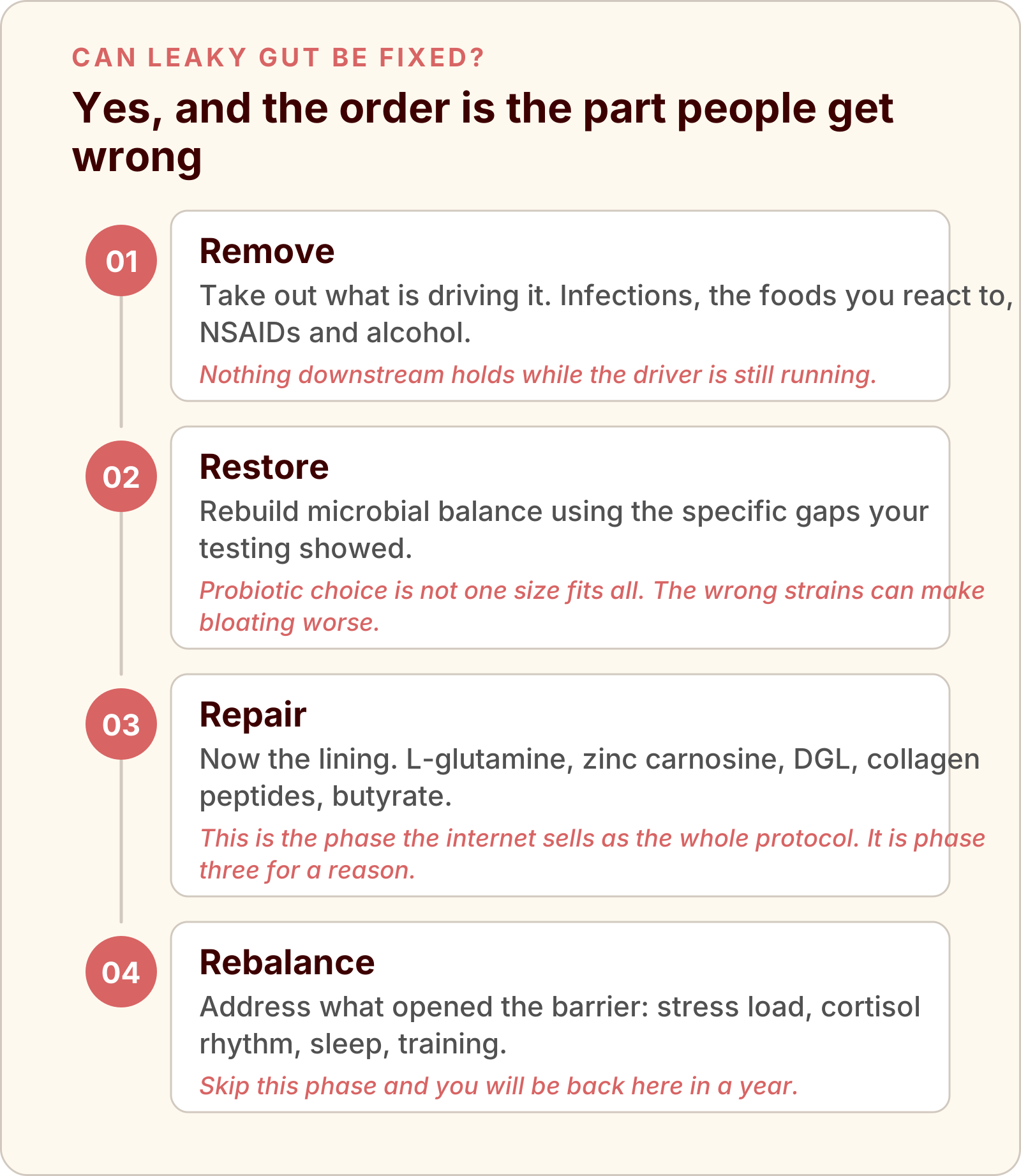
Phase 01. Remove. Take out what is driving it. Treating active infections (H. pylori, parasites, yeast overgrowth), pulling the foods you are reacting to, and being honest about NSAIDs and alcohol. Nothing downstream holds while the driver is still running.
Phase 02. Restore. Rebuild the microbial balance using the specific gaps your testing showed, not a generic multi-strain off the shelf. This is where testing pays for itself, because probiotic choice is not one-size-fits-all and the wrong strains can make bloating worse.
Phase 03. Repair. Now the lining. L-glutamine, zinc carnosine, DGL, collagen peptides and butyrate all support tight junction integrity and mucosal healing. This is the phase the internet sells as the whole protocol. It is phase three for a reason.
Phase 04. Rebalance. Address what opened the barrier in the first place: stress load, cortisol rhythm, sleep, and how you are training. Skip this phase and you will be back here in a year.
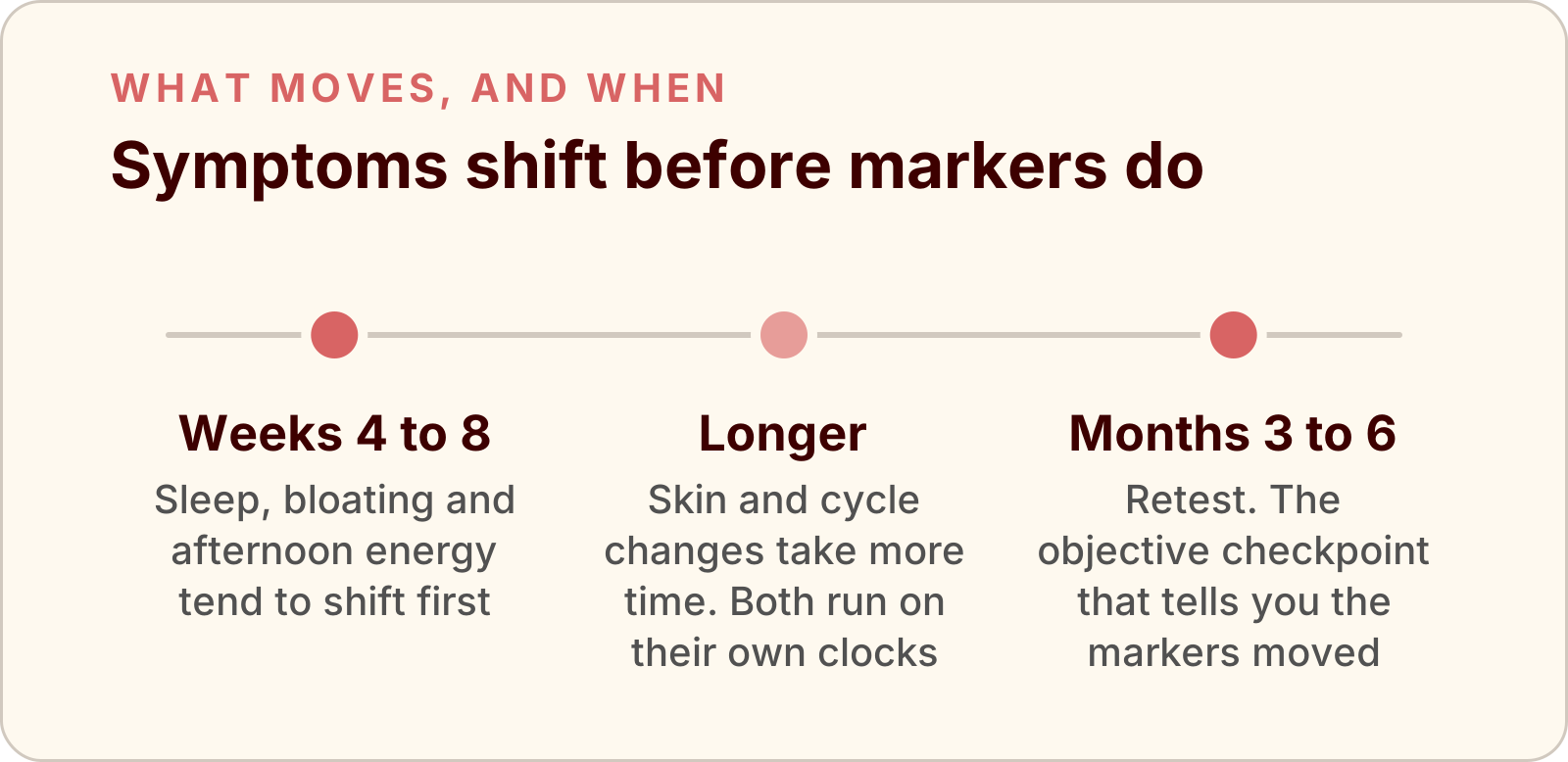
Most women notice symptom change well before the markers move. In Shae’s practice, sleep, bloating and afternoon energy tend to shift first, often inside the first four to eight weeks. Skin and cycle changes take longer, because both run on their own clocks.
The objective checkpoint is a retest at three to six months. That is what tells you whether the markers actually moved, or whether you just got used to feeling slightly better.
The bottom line
Leaky gut, properly called intestinal hyperpermeability, is a loosening of the barrier between your gut and your bloodstream. When it opens, things cross that should not, your immune system responds, and the inflammation that follows does not stay in your abdomen.
In women that shows up as new food sensitivities, skin that changed, heavier periods and worse PMS, brain fog, anxiety, joint pain, and fatigue that sleep does not touch. Almost none of that reads as a gut problem, which is exactly why it gets missed.
It is measurable through barrier and inflammation markers alongside the microbial picture behind them. It responds to a protocol run in the right order. And it is one of the most common things we find in women who have been told, repeatedly, that everything looks fine.
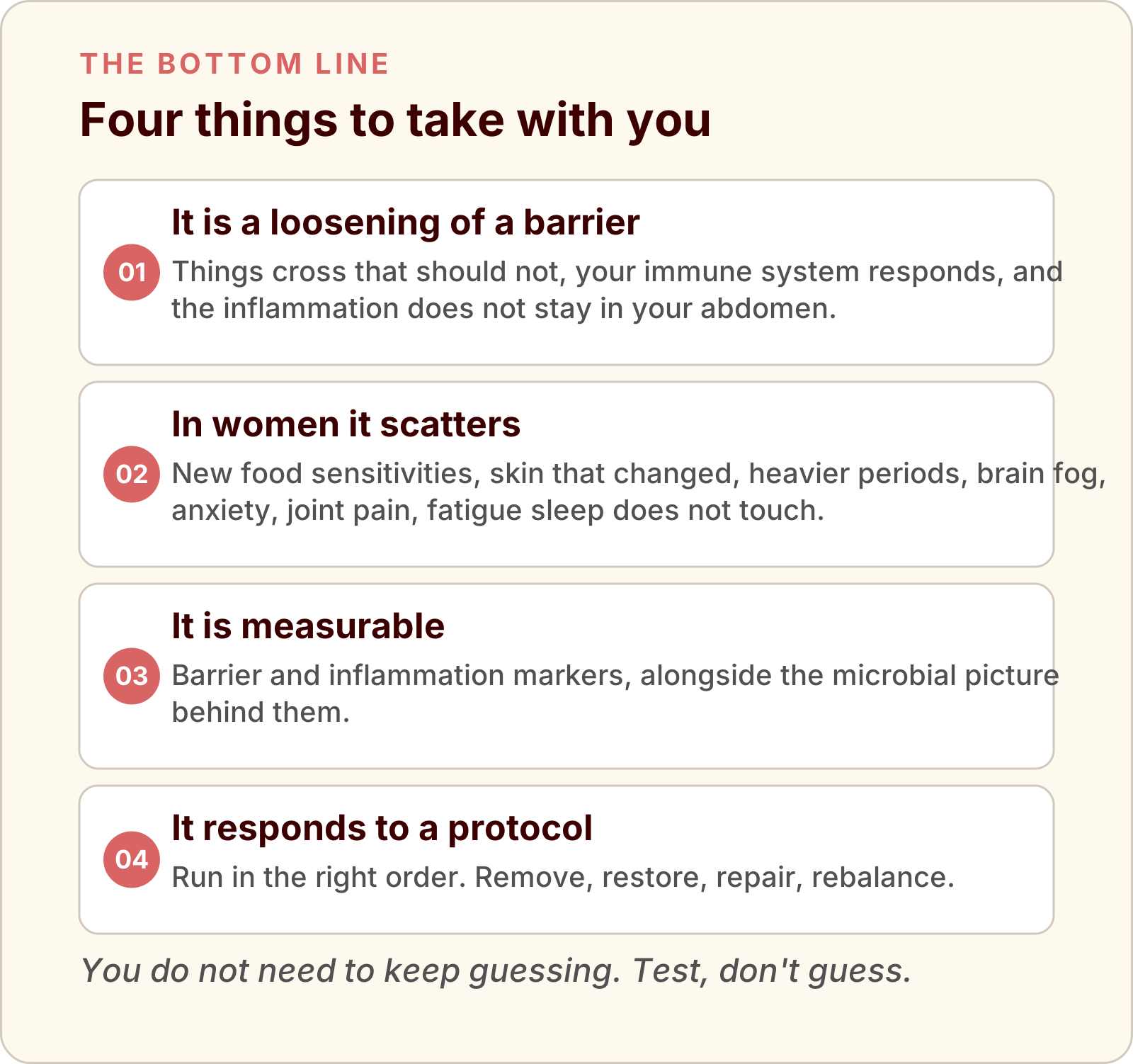
You do not need to keep guessing. Test, don’t guess.
Questions we get a lot
Is leaky gut a real medical diagnosis?
Intestinal hyperpermeability is a well-documented phenomenon with a substantial research literature behind it. “Leaky gut syndrome” is not a formal ICD-10 diagnosis, which is a real distinction worth being honest about. What that gap reflects is how slowly functional research moves into conventional clinical coding, not an absence of evidence. The underlying mechanisms are real and the markers are measurable.
Can you have leaky gut without any digestive symptoms?
Yes, and it is more common than you would expect. The downstream effects (skin, brain fog, hormones, joints, autoimmunity) can dominate completely while digestion feels basically fine. A lot of women are genuinely surprised by their results because they never considered themselves to have “gut problems.”
Do I need the GI-MAP or the Mucosal Barrier Assessment?
If your symptoms span gut plus skin, mood and hormones and you want to know what is driving it, the GI-MAP is the better first move, because it maps the organisms and the inflammation together. If your picture is weighted toward absorption problems, nutrient deficiencies or autoimmune signals and you would rather have barrier integrity measured from blood, the Mucosal Barrier Assessment is the more direct answer. If you are not sure, the free evaluation will point you to one.
Can I just get this tested at my regular doctor?
You can get a standard GI workup, and you should if you have alarm symptoms like blood in your stool, unexplained weight loss, or severe pain. What a conventional workup is not designed to do is characterize barrier function or map your microbiome, because those results do not change the standard treatment pathway. It is a difference in scope, not a difference in competence.
Does a gluten-free diet fix leaky gut?
For some women, particularly those with elevated anti-gliadin IgA or non-celiac gluten sensitivity, removing gluten is a meaningful part of it. On its own it is rarely enough. If there is an active infection, significant dysbiosis, chronic NSAID use or an unaddressed stress load underneath, removing one food will not close the barrier.
How long does it take to heal?
Symptom change often starts inside four to eight weeks with consistent work. Markers take longer, and significant dysbiosis or an active infection can mean three to six months of protocol before a retest looks meaningfully different. Retesting at three to six months is how you find out, rather than guessing from how you feel.
Does leaky gut cause weight gain?
Indirectly, and through more than one route. Endotoxin driving cortisol, recirculated estrogen from elevated beta-glucuronidase, thyroid disruption, and a microbiome that influences how you extract and store energy all push the same direction. It is rarely the whole story, which is why we look at gut alongside thyroid, sex hormones and metabolic markers rather than in isolation.
Can leaky gut cause heavy periods or bad PMS?
It can absolutely contribute. The mechanism is beta-glucuronidase, an enzyme made by certain gut bacteria that reactivates estrogen your liver had already packaged for disposal, so it gets reabsorbed instead of eliminated. That pattern looks like heavier bleeding, worse PMS, breast tenderness and midsection weight. It is measurable, and it is on the stool panel.
Are gut healing supplements safe to just start on my own?
Some are low risk and some are not, and the bigger problem is sequence rather than safety. Repair-phase supplements taken while an active infection or significant dysbiosis is still running tend to produce a small temporary improvement and then a plateau, which costs you months. Tell whoever manages your prescriptions what you are taking, and get the testing done first so the money goes to the right phase.
Keep reading
Gut + hormones · Hormones or Gut? Why It’s Usually Both
Testing · What is the GI-MAP Test and What Does It Actually Show?
Hormones · Your hormones are not just high or low. What your body does with them matters.
Supplements · Why supplementing without testing can make things worse
Getting started · Where to Start When You’re Not Ready for Labs

Take the free 3-minute evaluation
Or download Gut Imbalance 101, free, from our free resources.
Written and reviewed by Shae Davis, FDN-P, CPT, CNC. Founder of SeshDx. Shae works with women who have done everything “right,” the bloodwork, the clean eating, the supplements, the workouts, and still feel exhausted, reactive and not quite like themselves. What her certifications actually mean.
Medical disclaimer: This article is for educational purposes and is not medical advice, diagnosis, or treatment. Functional lab testing is not a substitute for evaluation by a licensed medical provider, and individual results vary. Talk with your licensed healthcare provider before starting any supplement or protocol, especially if you are pregnant, nursing, managing a thyroid or autoimmune condition, or taking prescription medication. If you have blood in your stool, unexplained weight loss, persistent vomiting, or severe abdominal pain, please see a clinician promptly rather than starting a self-directed protocol.