Here is something standard blood testing cannot tell you: whether the nutrients showing up in your bloodstream are actually reaching your cells and functioning there. Serum levels and cellular function are not the same measurement. They are not even close to the same measurement.. and the gap between them is where most functional nutrient deficiencies live.
What’s the difference between serum levels and cellular function?
Standard nutrient testing measures serum levels: the concentration of a nutrient circulating in the bloodstream at the time of the draw. This is a useful screening tool for severe, acute deficiency. It is not a useful tool for functional nutritional status.
The body is extraordinarily good at maintaining serum homeostasis. When tissue stores of a nutrient begin to deplete, the body pulls from those stores to keep circulating levels within range. A woman can have substantially depleted intracellular nutrient stores, producing real and measurable symptoms, while her serum levels clear every reference range on a standard panel. This continues until the deficiency becomes clinically significant. By that point, the symptoms have often been present for months or years.
Cellular micronutrient testing asks a fundamentally different question. Not "how much of this nutrient is in your blood," but "is this nutrient available and functional at the cellular level, where your body actually uses it." That distinction is where most functional deficiencies live, and where standard testing is completely blind.
Why are women particularly vulnerable?
Nutrient depletion in women is driven by compounding factors that standard medicine rarely investigates together.
Hormonal fluctuations across the menstrual cycle, perimenopause, and postpartum significantly affect both nutrient demand and absorption. Estrogen influences magnesium utilization. Progesterone affects B6 metabolism (and B6 depletion in turn affects hormone clearance, as covered in our earlier post on the DUTCH Complete). The hormonal shifts of perimenopause increase demand for antioxidants, CoQ10, and key minerals at precisely the time absorption efficiency begins to decline.
Chronic stress is one of the most significant drivers of nutrient depletion and one of the least discussed. Cortisol mobilization burns through magnesium, B vitamins, vitamin C, and zinc at an accelerated rate. Women under sustained stress are often depleting nutrients faster than even a high-quality diet can replace (for a full breakdown of what cortisol does to metabolic function, see our earlier post on the stress-metabolism loop). This won't show on a serum panel until the depletion is severe.
Gut dysfunction compounds everything. Nutrient absorption is a gut function. When the gut microbiome is disrupted, intestinal permeability is elevated, or digestive enzyme output is insufficient, even an excellent diet produces inadequate cellular nutrient delivery. Low stomach acid impairs protein digestion and mineral absorption simultaneously. Gut health and nutrient status are deeply interconnected, and both are worth investigating when symptoms overlap.
What does the Micronutrient Panel actually evaluate?
The Micronutrient Panel tests cellular nutrient status across a comprehensive range of markers, not just the handful included in a standard blood draw.
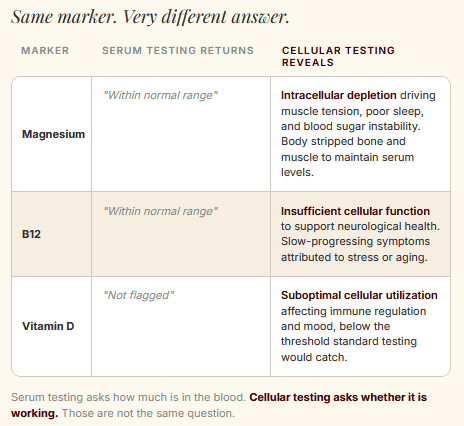
Vitamins A, B1, B2, B3, B6, B12, biotin, folate, pantothenate, C, D, E, and K: assessed at the cellular level, not in serum. B12 deficiency in particular produces neurological symptoms that progress slowly and are frequently attributed to stress or aging, while serum levels remain within range.
Minerals include calcium, magnesium, manganese, zinc, and copper. Magnesium is a cofactor in over 300 enzymatic reactions governing energy production, blood sugar regulation, and nervous system function. Serum magnesium is one of the least reliable markers for actual magnesium status: the body strips it from bone and muscle to maintain serum levels, so a normal result can coexist with significant intracellular depletion.
Antioxidants and cellular protection markers including alpha lipoic acid, CoQ10, cysteine, glutathione, selenium, and total antioxidant function. CoQ10 is essential for mitochondrial energy production and is frequently depleted in women over 35, particularly those on statin medications.
Metabolic and nutrient utilization markers including chromium, glucose-insulin metabolism, carnitine, choline, and inositol. Carnitine deficiency produces fatigue and exercise intolerance that is frequently misattributed to overtraining or hormonal issues.
Amino acids asparagine, glutamine, and serine: precursors for neurotransmitter synthesis, immune function, and cellular repair. Glutamine is the primary fuel source for both intestinal cells and immune cells. Deficiency impairs gut barrier integrity and immune response simultaneously.
An immune response score: a functional marker of how well the immune system is performing, reflecting the cumulative impact of nutritional status on immune cell activity.
What serum "normal" is missing
Their B12 cleared the range, but cellular B12 function is insufficient to support neurological health. Their magnesium came back fine, but intracellular magnesium is depleted enough to drive muscle tension, poor sleep, and blood sugar instability. Their vitamin D wasn't flagged, but cellular utilization is suboptimal in ways that affect immune regulation and mood.
None of this is detectable by standard testing. All of it is detectable by the right testing.
What happens after the panel?
When Shae reviews a Micronutrient Panel, she's reading cellular function across every marker category, not just whether levels cleared a threshold. The protocol that follows is built around what the cells are actually showing: targeted nutrition to correct deficiencies through food first, specific supplementation based on what is actually depleted rather than general wellness guesswork, and lifestyle adjustments that support absorption and reduce ongoing depletion. Where patterns suggest underlying gut dysfunction or hormonal drivers, those are flagged for further investigation.
The goal is never to hand over just a supplement list. It's to understand why cells aren't getting what they need, and build a plan that actually fixes it.