The short answer
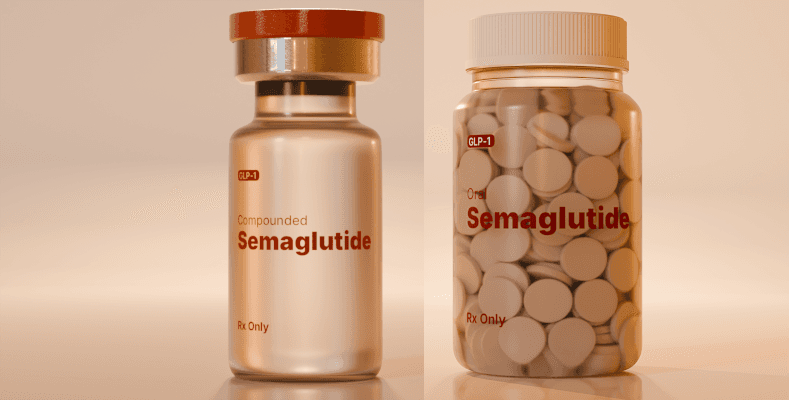
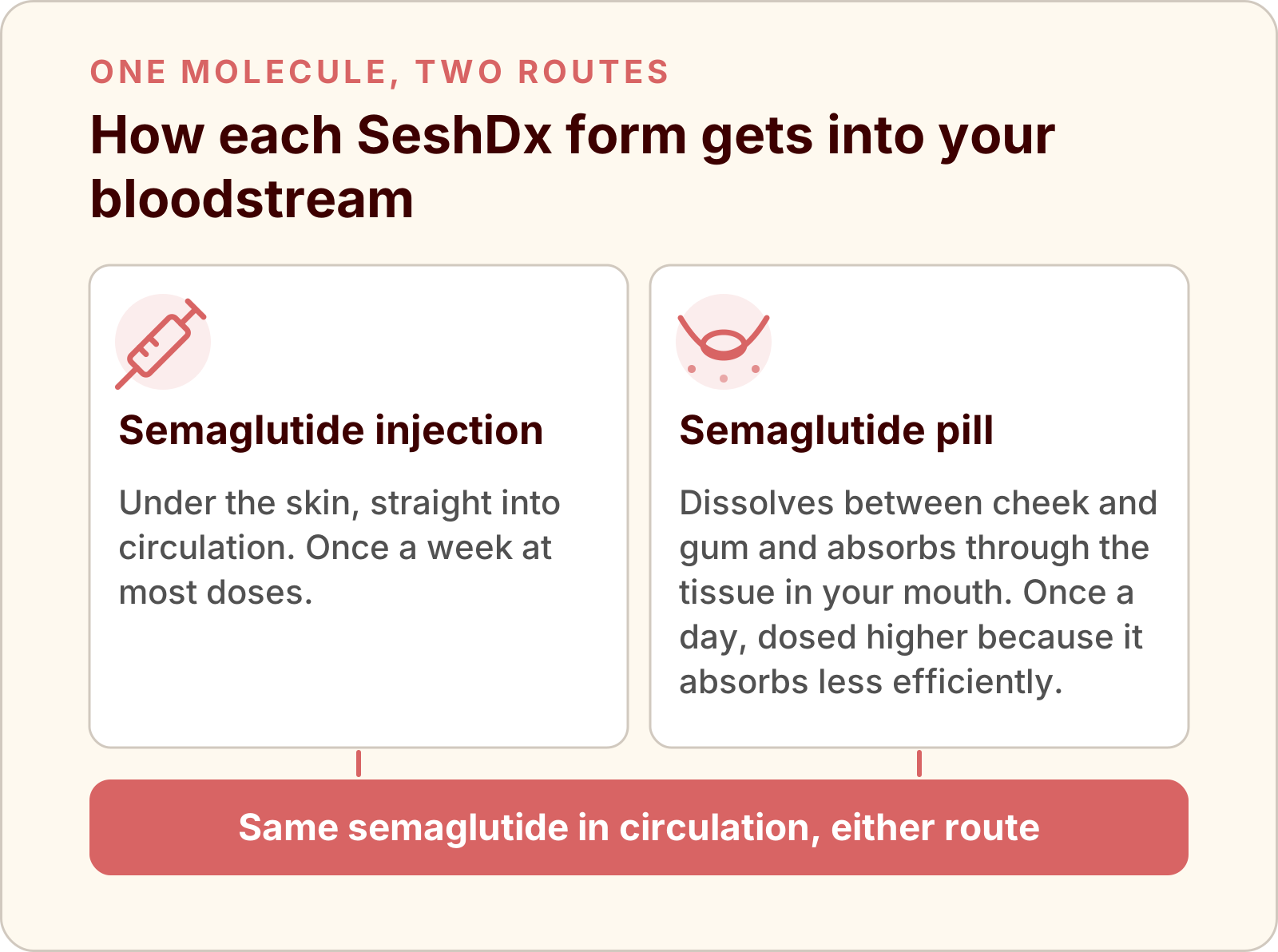
Semaglutide is the same molecule whether it reaches your bloodstream through a needle or through your mouth. What changes is how it gets there, how consistently it shows up, and what it asks of you every day.
The weekly injection has the longest track record and the most published research behind it. The daily pill removes the needle entirely, which, for a meaningful number of women, is the difference between starting and not starting. It absorbs less efficiently than an injection, so it is dosed to account for that. They are two delivery routes for the same GLP-1, and the better one is the one you will actually take for a year.


First: what the SeshDx pill actually is
Most of the confusion online comes from people talking about “the pill” as if every semaglutide tablet worked the same way. They do not.
Some semaglutide tablets are swallowed. The medication has to make it through your stomach before it can be absorbed, which is why swallowed tablets come with strict rules about taking them on an empty stomach and waiting before you eat or drink.
The SeshDx Semaglutide Pill is not swallowed. It is a compounded dissolving tablet that sits between your cheek and gum, dissolves, and absorbs through the tissue in your mouth.
That difference matters when you read online that “the pill barely absorbs.” That is usually a description of swallowed tablets. It is still true that absorption through the mouth is less efficient than an injection, which is why the pill is dosed higher to account for it.
How the injection works
Semaglutide is a GLP-1 receptor agonist. It mimics glucagon-like peptide-1, a hormone your gut releases after you eat, which signals fullness to the brain, slows gastric emptying, improves insulin response, and reduces appetite and cravings.
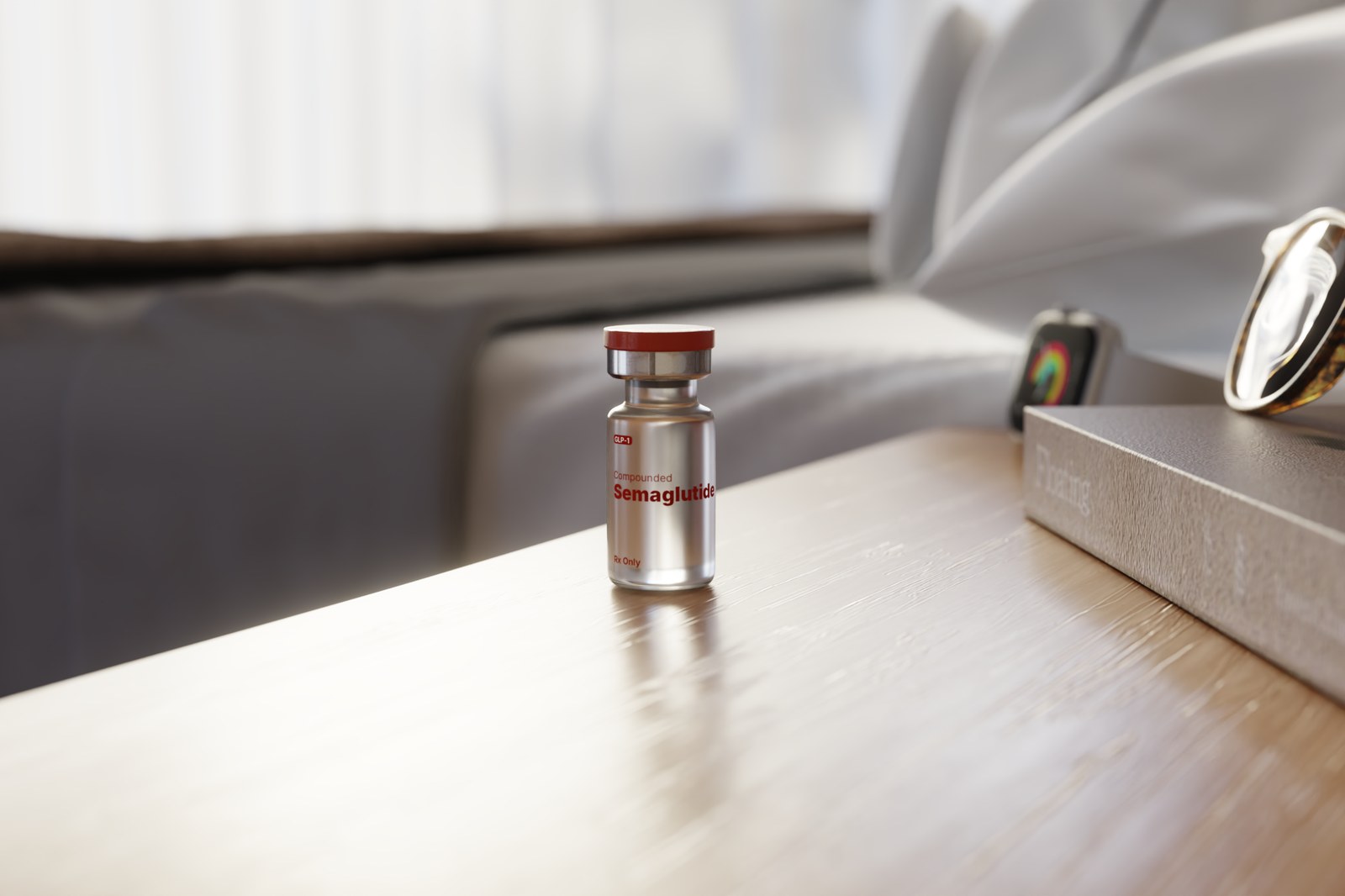
Injected into the fat layer under the skin, it enters circulation directly. Nothing has to survive digestion. That gives you steady drug levels across the week, and injected semaglutide is the most studied way to take it.
Practically: one small subcutaneous injection a week, usually abdomen, thigh, or upper arm, with a short needle most people describe as far less unpleasant than they braced for. Dosing starts low and steps up over several months, and at some higher doses your clinician may split the weekly amount into two smaller injections.
How the pill works
The SeshDx Semaglutide Pill takes the same molecule and delivers it through the mucous membrane inside your mouth. The tablet sits between cheek and gum and dissolves, and absorption happens through that tissue rather than through your stomach.
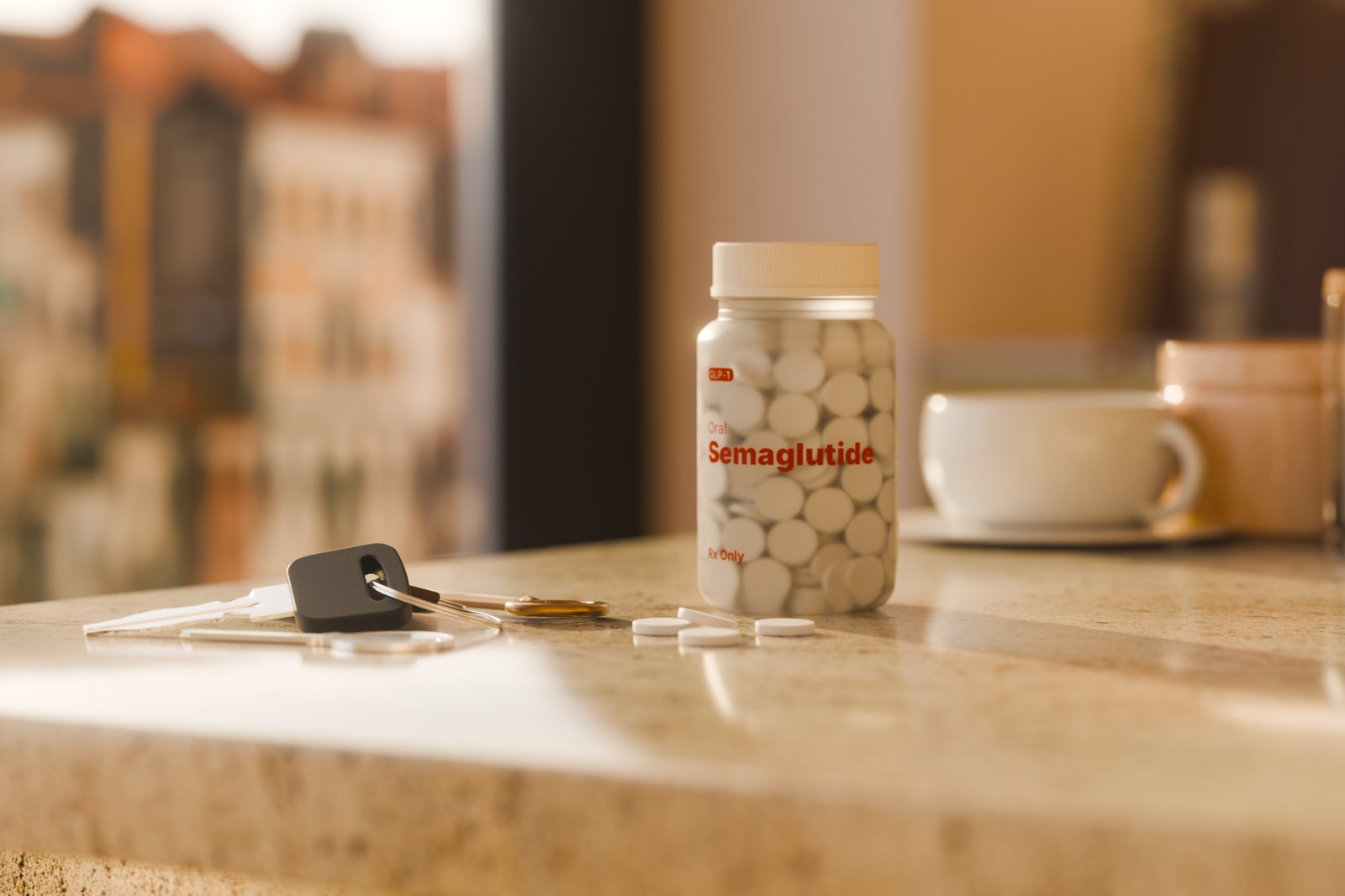
Because absorption through the mouth is less efficient than an injection, the pill is dosed higher to account for it. That is a formulation decision your clinician makes, not something to compare milligram-for-milligram against an injection, because the two numbers are not measuring the same thing.
Practically: one tablet daily, no needles, and no sharps to dispose of. The dose steps up gradually as your clinician adjusts it. It does ask for daily consistency rather than a once-a-week ritual, and it asks you to let it dissolve rather than swallowing it out of habit.
Side by side
Semaglutide injection
Frequency: once weekly at most doses
Route: subcutaneous, straight into circulation
Daily demands: none between doses
Needles: yes
Travel: needles and sharps to pack and dispose of
Track record: the most studied way to take semaglutide
Common side effects: GI (nausea, constipation, reflux), heaviest during dose increases
Semaglutide pill
Frequency: once daily
Route: dissolves between cheek and gum and absorbs through the tissue inside the mouth
Daily demands: a consistent daily slot, and letting it dissolve properly
Needles: none
Travel: nothing to inject, no sharps
Track record: shorter, with less published research than the injection
Common side effects: GI, the same class of effects, since it is the same molecule
What actually decides it
It is tempting to make this a needle question. In practice the deciding factor is adherence: which format you will still be using in month nine.
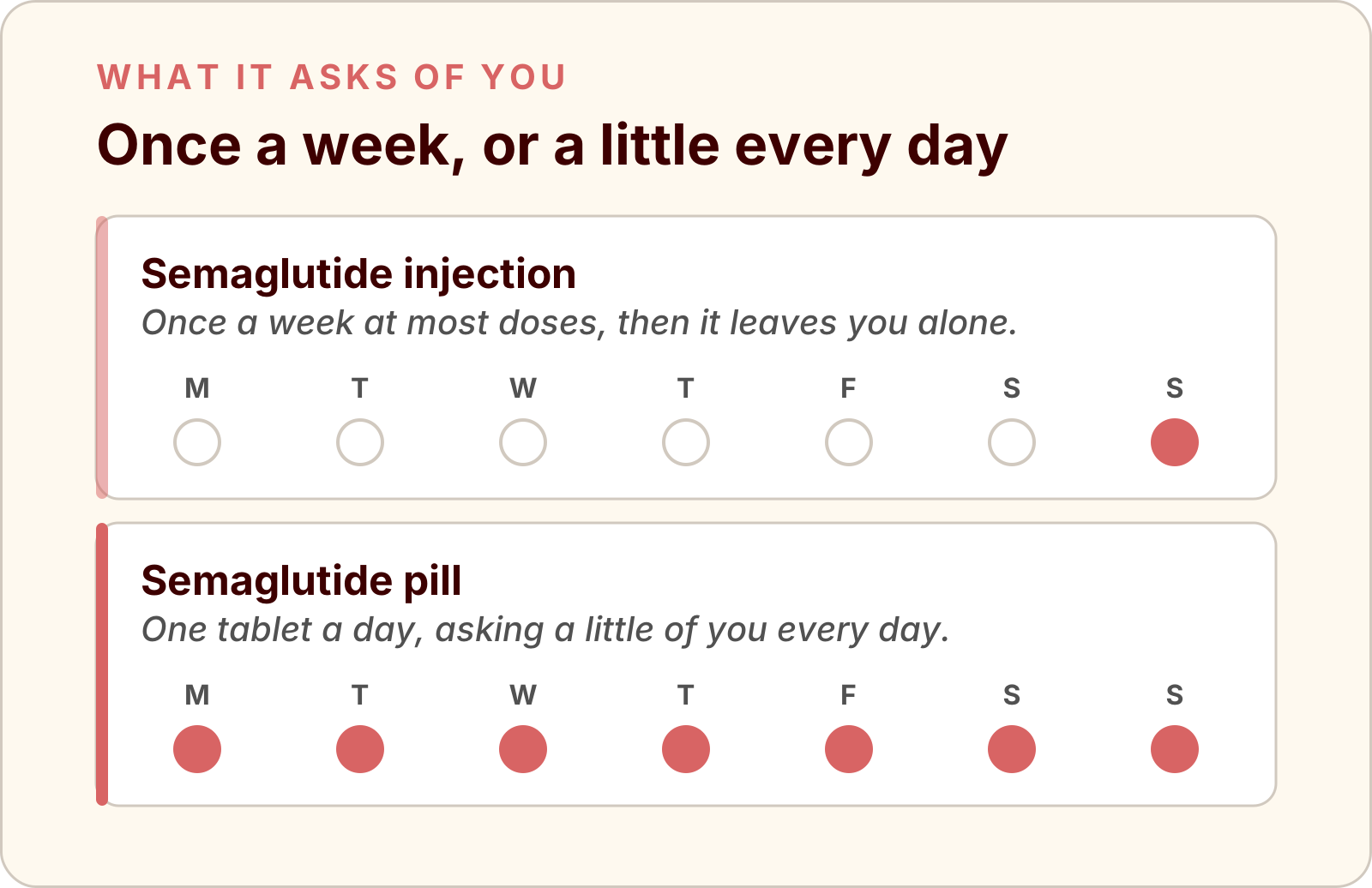
A weekly injection asks a lot of you once and then leaves you alone. If you are someone who sets a Sunday reminder and never thinks about it again, that is a real advantage, and the steady week-long drug levels are a genuine clinical plus.
A daily tablet asks a little of you every day. If needle aversion is what has kept you from starting (and for a lot of women it is, and there is nothing irrational about it), then the daily ask is trivially easier than the alternative of not treating at all. It also stacks neatly into a routine you already have.

The honest version: the injection has the deeper evidence base, and we prescribe it. The pill removes the single most common barrier to starting, and we prescribe that too. This is a fit question, not a ranking.
What “compounded” means, and what it does not
Our semaglutide injection, semaglutide pill, and tirzepatide injection are all compounded: prepared by licensed U.S. compounding pharmacies for an individual patient under a clinician’s prescription, rather than dispensed as a branded, FDA-approved product.
What that means in plain terms:
Compounded medications are not FDA-approved, and they are not reviewed by the FDA for safety or effectiveness. Published clinical trials of semaglutide and tirzepatide were run on FDA-approved products, not on compounded preparations.
Compounding allows dose and delivery to be tailored to a specific patient where there is a clinical reason for it. That is the mechanism that makes a dissolving tablet form possible at all.
Sourcing and testing matter enormously. Ours are prepared in certified U.S. pharmacies and tested for purity, sterility, and consistency.
A licensed clinician reviews your intake and decides whether your chosen prescription is appropriate for you. Not everyone qualifies, and that is the point of the review.
What about tirzepatide
Any honest comparison has to mention it. Tirzepatide activates two receptor pathways (GIP and GLP-1) rather than one. At SeshDx, tirzepatide is prescribed as a weekly injection only. There is no tirzepatide pill option.
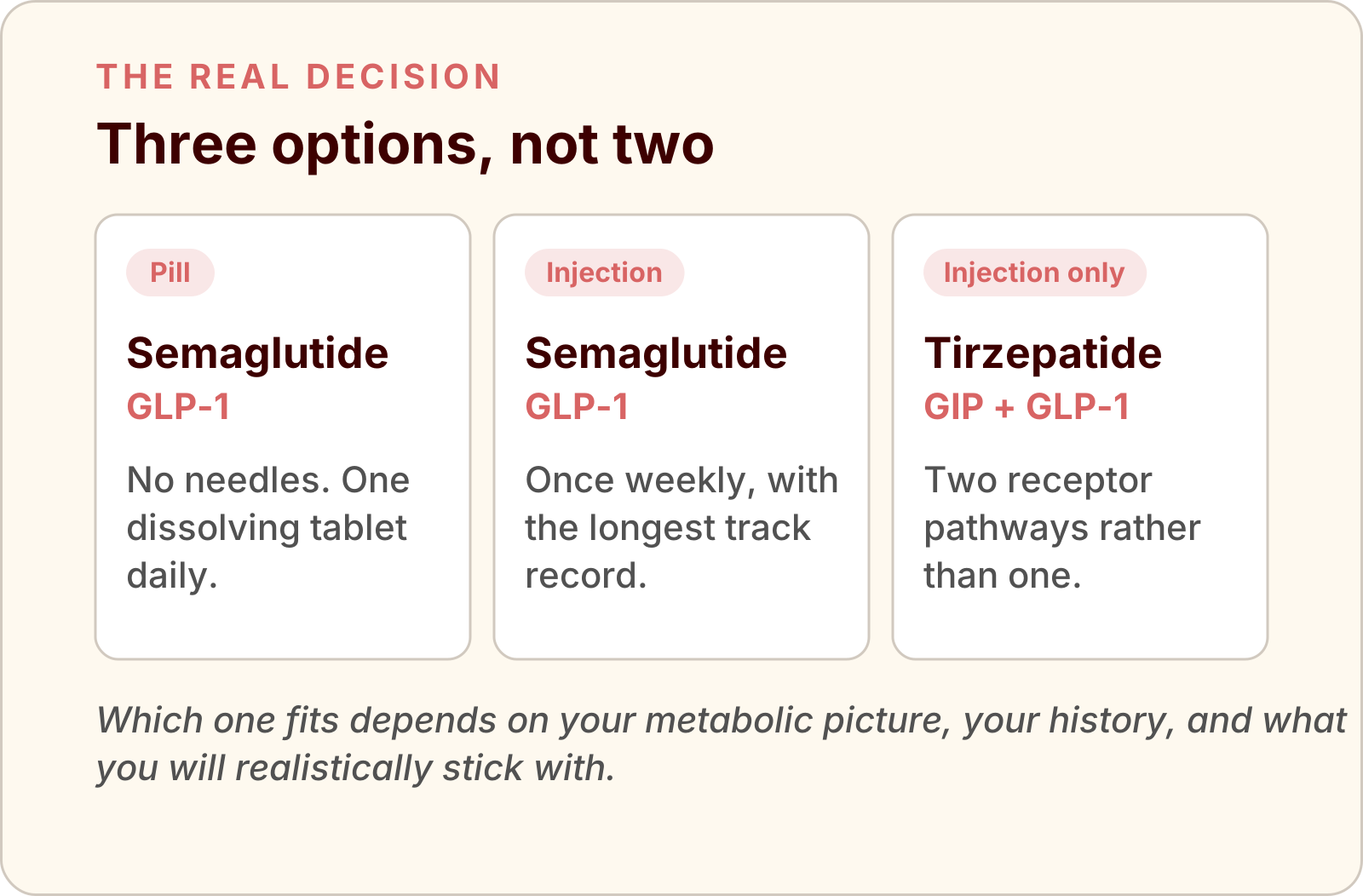
So “pill or injection” is really a three-way decision: the semaglutide pill, the semaglutide injection, or the tirzepatide injection. We offer all three, and which one fits depends on your metabolic picture, your history, and what you will realistically stick with.
How we approach this at SeshDx
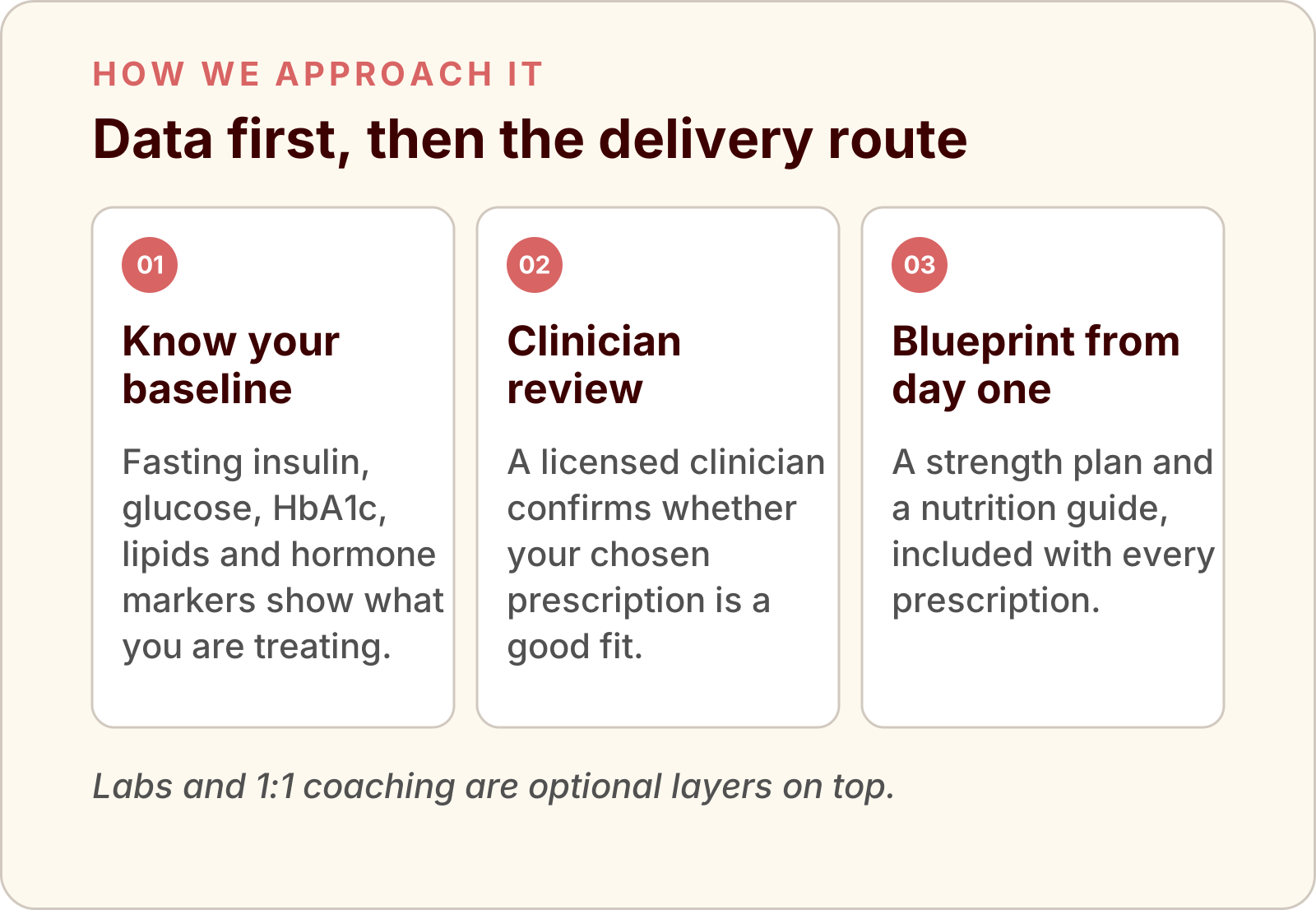
We would rather look at your metabolic data before anyone picks a delivery route. Fasting insulin, glucose, HbA1c, lipids, and the relevant hormone markers tell you what you are actually treating and give you a baseline to measure against later. A Metabolic Health Panel covers that ground.

From there, a licensed clinician reviews your intake and confirms whether your chosen prescription is a good fit. Every prescription client gets the SeshDx Blueprint (a strength plan and a nutrition guide) included from day one, because a GLP-1 with no protein target and no resistance training is how you lose weight you did not want to lose. Labs and 1:1 coaching are optional layers on top.

Common questions
Is the pill just a weaker version of the injection?
It is the same molecule, dosed for a different absorption route. Because absorption through the mouth is less efficient, the pill is dosed higher to account for it. Comparing the milligram numbers directly will mislead you: your clinician sets the dose for the route.
Can I switch from one to the other?
Yes, with clinician guidance. Doses are not interchangeable between routes, so a switch involves recalibration rather than a straight swap.
Does the pill have fewer side effects?
Not inherently. GLP-1 side effects are mostly GI and come from the molecule, not the needle. Some people find a daily dose feels more even than a weekly peak; others prefer the weekly rhythm. Both are dosed up gradually to limit it.
Is the injection painful?
Most people are surprised by how little they feel it. The needle is very short and very fine. If that is still a hard no for you, the pill exists precisely for that reason.
Is there a tirzepatide pill?
Not at SeshDx. We prescribe tirzepatide as a weekly injection only. If you want to avoid needles, the semaglutide pill is the option to look at.
Will the weight come back if I stop?
For most people, some of it does. GLP-1 medication addresses an active physiological driver, and when you remove it, the driver returns, similar to how blood pressure rises again when blood pressure medication stops. This is exactly why we pair prescriptions with training and nutrition from day one: the muscle you build and the habits you keep are the part that stays. How long to stay on is an individual decision made with your clinician.
The bottom line
In 2026 you have real choices at SeshDx: a weekly semaglutide injection, the most studied way to take it; a daily semaglutide pill that dissolves between cheek and gum and removes the needle entirely; and a weekly tirzepatide injection as the dual-pathway option. All require a prescription and a clinician’s review. All work best attached to protein, resistance training, and a baseline you can measure.
If you are stuck between the pill and the injection, start by finding out whether either one is a fit for you.
Take the free 3-minute evaluation →
See Semaglutide GLP-1 injection →

Want a person to talk it through with before you decide? Book a 1:1 with me →
This content is educational and does not constitute medical advice. Compounded medications are not FDA-approved and are not reviewed by the FDA for safety or effectiveness. GLP-1 medications require a prescription from a licensed clinician; not all patients qualify. Please consult a licensed healthcare provider before starting any new health protocol. The regulatory and clinical landscape for GLP-1 medications changes; this post reflects the status as of September 2026.