By late July 2026, the recall notices had done their job. The bagged iceberg lettuce came off the shelves, the headlines moved on, and most people assumed the story was over. For your gut, it may not be.
This summer’s cyclospora outbreak became one of the largest the CDC has tracked. As of the agency’s latest update, roughly 6,358 illnesses were reported across 15 states, with more than 278 hospitalizations and two deaths, much of which was traced back to iceberg lettuce processed by Taylor Farms de Mexico and sold under retail brands including Marketside at Walmart. The recall went out on July 17. If you ate a salad in June or July and spent the following weeks feeling wrecked, you were not imagining it.
Here is the part nobody puts on the recall notice: a parasite can leave your gut changed long after the parasite itself is gone. That lingering feeling of “I never really bounced back” is measurable. And measurable means fixable.
What cyclospora actually is (and why it hits so hard)
Cyclospora is a microscopic parasite, Cyclospora cayetanensis, that infects the small intestine after you eat contaminated fresh produce. It cannot spread person to person. It gets in through food, usually raw items like leafy greens, herbs, and berries.
Symptoms usually show up about a week after exposure, though the range runs from two days to two weeks or more. The hallmark is watery, frequent diarrhea, often paired with loss of appetite, cramping, bloating, nausea, and a bone-deep fatigue that outlasts everything else. Left untreated, it can drag on from a few days to over a month, and it has a cruel habit: symptoms can seem to clear, then relapse days later. The standard treatment is a prescription antibiotic (trimethoprim-sulfamethoxazole, sold as Bactrim or Septra), which is why an acute infection belongs in the hands of a licensed provider, not a supplement shelf.
If you are acutely ill right now, see a doctor. A stool test to understand the aftermath is a step for after the infection is treated, not a substitute for treatment.
Why you still feel “off” weeks later
An acute infection is a fire. What we care about at SeshDx is the smoke damage it leaves behind.
A parasite like cyclospora inflames the lining of your small intestine, the exact surface responsible for absorbing your nutrients and keeping the rest of your body walled off from what is inside your gut. When that lining takes a hit, a few things tend to follow. The balance of your gut bacteria gets knocked sideways, a state called dysbiosis. The junctions that keep your gut wall selectively sealed can loosen, sometimes described as intestinal permeability. Your gut’s first-line immune defense, secretory IgA, can run low. And foods you used to tolerate without a second thought can suddenly leave you bloated, foggy, or inflamed.
There is even a name for the tail end of this: post-infectious IBS, where the digestive symptoms persist long after the original bug is cleared. So when you tell people the infection is “over” but you still feel bloated, exhausted, and reactive to food, you are not being dramatic. Your gut is telling you the story is not finished. The question is what specifically got left behind, and generic advice cannot answer that. Test, don’t guess.
Step one: a GI-Map to see what the infection left behind
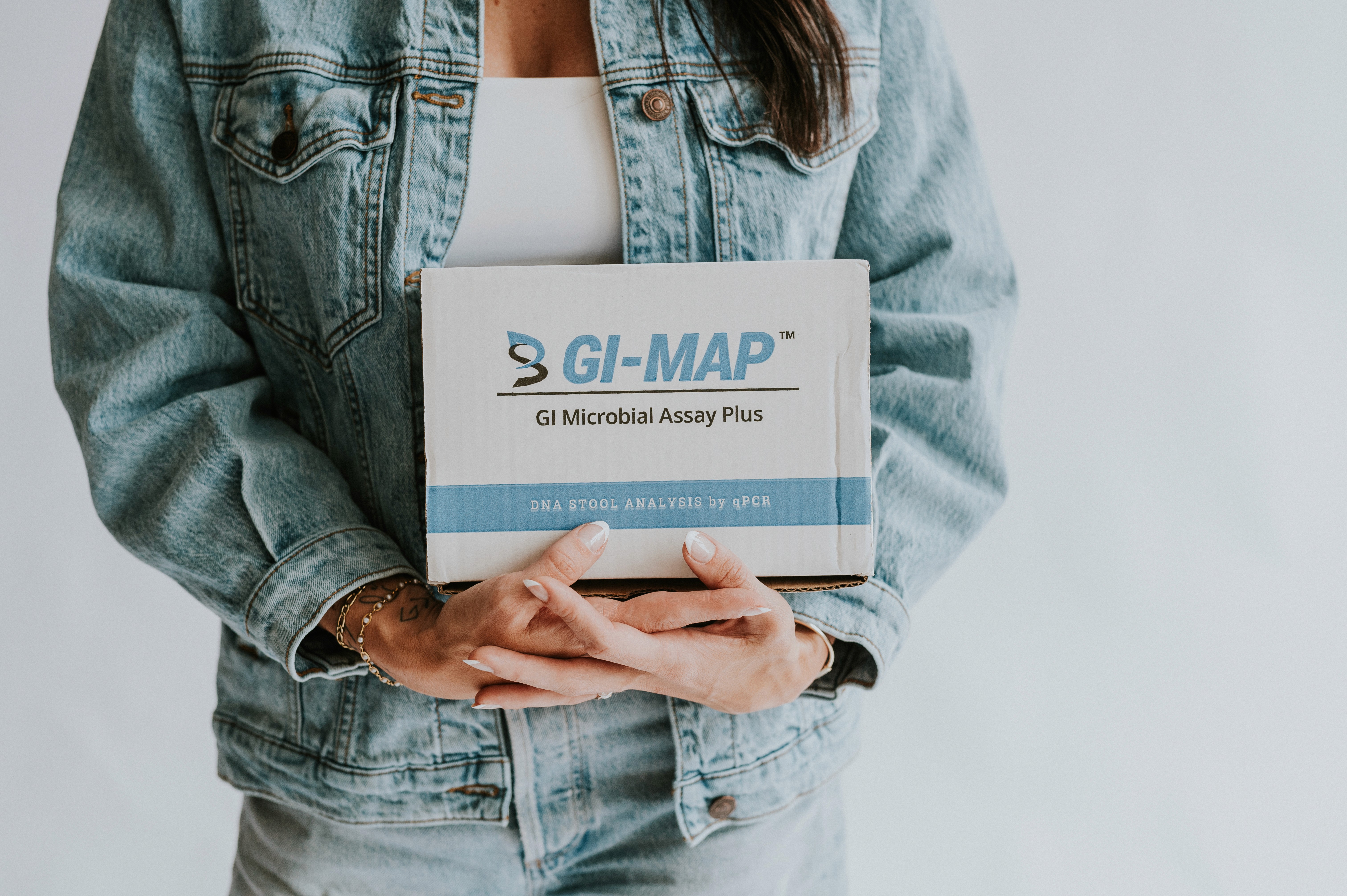
A GI-Map stool test is a DNA-based look at your gut, and it is built to surface exactly the kind of collateral damage an infection leaves. Instead of guessing, you get a readout of the bacterial balance in your gut, opportunistic overgrowths that can bloom after a disruption, yeast and parasites, and the markers that tell us how your gut is actually functioning: inflammation (calprotectin), the integrity of your gut lining (zonulin), your immune defense (secretory IgA), and how well you are breaking down food (elastase).
In plain terms, it takes “I just feel off” and turns it into a specific, named list of what to work on. If you want the deeper walkthrough, we wrote a full explainer on what the GI-Map test actually shows. For a closer look at the gut-lining piece specifically, a Mucosal Barrier Assessment measures how well that protective wall is holding up.
Step two: a food sensitivity panel for the reactions that are new
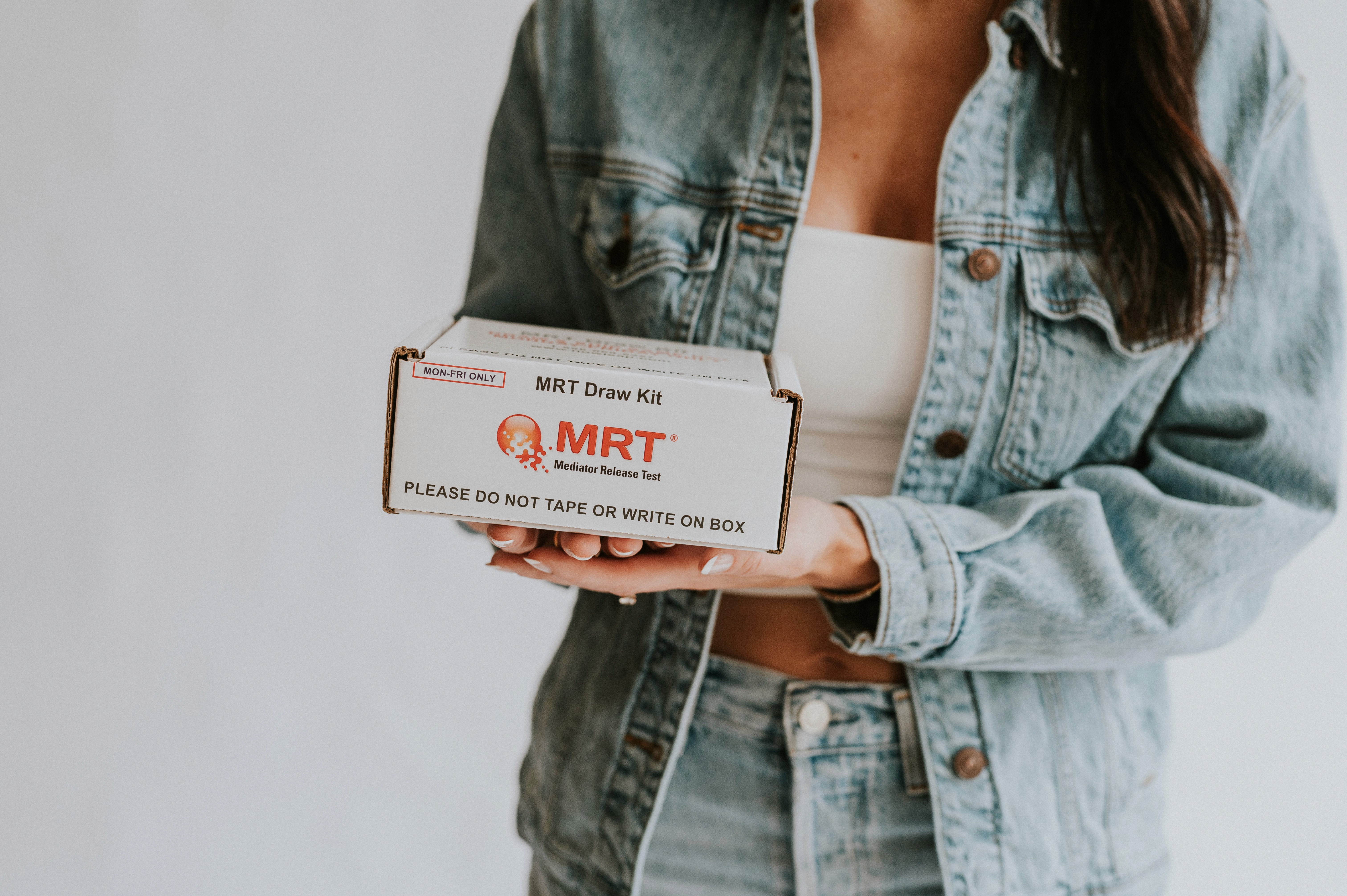
Here is a pattern we see constantly after a gut infection: foods that were fine your whole life suddenly are not. That is because a stressed, inflamed gut lining can start reacting to proteins it used to wave through.
A Food Sensitivity Test maps which foods your body is currently reacting to, so you are removing the actual culprits instead of cutting out half your diet on a hunch. One honest note, because we would rather tell you the truth: a food sensitivity panel is not an allergy test, and it is not a lifelong verdict. It is a snapshot of your reactions right now, and it works best as a starting map that you interpret with a coach and confirm by how you actually feel as things heal. That is the whole point of pairing it with the GI-Map: fix the terrain, and many of those reactions calm down on their own.
The part most testing skips: what you do with the results
Plenty of companies will sell you a test and hand you a PDF. That is where the value usually dies.
When you test with SeshDx, the result is the starting line, not the finish. Your markers inform a protocol built around what we actually found in your gut, not a generic cleanse. Every SeshDx client also gets the Sesh Fitness App at no cost, which includes a strength plan and a nutrition guide, because the food and training that support gut repair matter as much as anything in a bottle. And if you want a human in your corner, functional health coaching with our FDN-P is available as an add-on layer, someone to read your results with you and adjust as you heal. Then, when it is time, you retest and see the change in the numbers, not just in how you feel. That is the closed loop: test, treat, retest, prove it worked.
You do not have to start with labs. Some women start with coaching, some start with a plan in the app. But if a bout of food poisoning is the thing that pushed you here, testing is the fastest way to stop guessing about what it left behind.
Not sure where you land?
If you are reading this because your gut has not felt right since early summer, take our free 3-minute quiz. It asks about your symptoms and points you to the most useful next step, whether that is a GI-Map, a food sensitivity panel, coaching, or simply where to begin.
The lettuce is off the shelves. Let’s make sure your gut is not still carrying it.
SeshDx does not act or warrant itself as a licensed medical provider. All content is for educational and informational purposes only and is not intended to diagnose, treat, cure, or prevent any disease.
Frequently asked questions
Can cyclospora cause long-term gut problems?
For most healthy adults the infection resolves, especially with the right antibiotic. But an acute gut infection can leave lasting disruption: altered gut bacteria, a more permeable gut lining, and new food reactions. Some people develop post-infectious IBS, where digestive symptoms continue after the parasite is gone. Testing helps identify what remains.
How do I know if my gut recovered after cyclospora?
The honest answer is you often cannot tell from symptoms alone, because bloating and fatigue are non-specific. A stool test like the GI-Map measures gut bacteria balance, inflammation, gut-lining integrity, and immune markers, which is a far more direct read than guessing.
Should I get a food sensitivity test after food poisoning?
It can be useful if you have noticed new reactions to foods you used to tolerate. A food sensitivity panel maps your current reactions so you can remove the real triggers rather than eliminating foods at random. It is a guide, not an allergy test, and it works best alongside a gut test and a coach.
Is a GI-Map the same as the test my doctor ran during the outbreak?
No. During an active outbreak, providers use tests to detect the parasite itself so they can treat it. A GI-Map is used afterward to assess the broader state of your gut: bacterial balance, inflammation, lining integrity, and digestion, so you can rebuild.