Functional lab testing is a transformative tool, but it isn’t always the first one.
For most women, the foundations of strength training and macro-based nutrition produce more change in the first 90 days than any lab panel will. They’re also what makes lab work pay off later, because protocols built on top of weak foundations don’t hold. Here’s where to actually start.
We hear a version of this conversation regularly: “I think I want to do lab testing. But it’s also a lot of money right now, and I’m not sure I’m in the right place for it.”
Most of the time, our answer is: you’re probably right.
Lab testing is a powerful tool. It’s not always the most powerful one, and it’s almost never the first one. For most women, especially women in their 30s and 40s who haven’t trained consistently in years, the foundations of strength training and high protein, macro-based nutrition will produce more change in the first three months than any panel will. They’re also what makes diagnostics worth doing when the time comes, because functional protocols built on top of weak foundations don’t hold.
This post is for the woman who isn’t ready to invest in diagnostics yet, or doesn’t need to. Here’s where to actually start.
Why foundations come first
Most of the symptoms women want to fix with diagnostics (fatigue, body composition, sleep, mood, stress tolerance, “feeling like myself”) respond enormously to two inputs that don’t require a lab: lifting weight and eating enough protein.
Strength training builds and preserves muscle tissue, which is the largest insulin-sensitive organ in the body. More muscle means better blood-sugar regulation, better insulin sensitivity, better mitochondrial density (energy production at the cellular level), and a more resilient hormonal system overall.
Macro-based nutrition keeps blood sugar stable, supports hormone production (estrogen, progesterone, thyroid, and cortisol all require building blocks the average woman is under-eating), and gives the body the raw materials it needs to recover from training and from life.
Together, those two inputs upgrade nearly every system that lab work measures: gut function, hormonal balance, metabolic health, sleep, mood. They don’t replace diagnostics. They make diagnostics worth doing later.
Why strength training is non-negotiable for women
The cultural script most women in their 30s and 40s grew up with was wrong. Endless cardio is not the path to looking better, feeling better, or aging better. Eating less is not the answer. Bulky is not what happens when women lift heavy.
What actually happens when a woman trains progressively with weights:
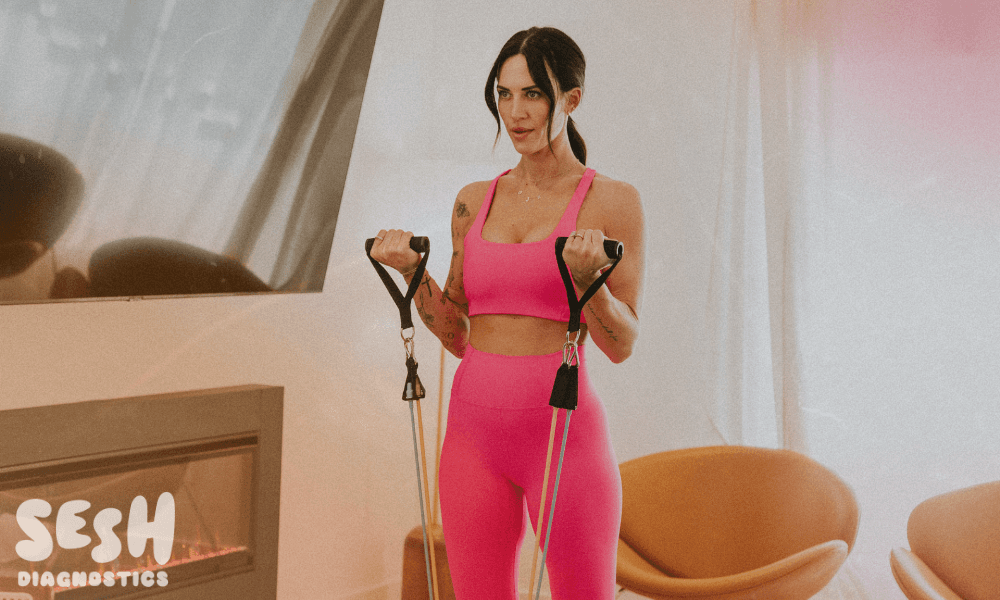
Body composition shifts. Muscle takes up less space than fat. Women who train heavy don’t get bulky. They get tighter, denser, stronger.
Bone density improves. The estrogen drop in perimenopause and menopause accelerates bone loss. Resistance training is one of the only known interventions that meaningfully protects against it.
Hormonal regulation stabilizes. Strength training improves insulin sensitivity, regulates cortisol response, and supports healthy testosterone and growth hormone levels, all of which decline with age.
Mood and energy lift. Consistent lifting is one of the most reliable interventions in the research literature for anxiety, low mood, and afternoon energy crashes independent of weight loss.
Sleep quality improves. Particularly deep sleep, which is when growth hormone is released and most tissue repair happens.
Training has to be progressive (loads increase over time), periodized (intensity cycles to prevent burnout), and sustainable (3–5 days per week, not 6 hours per day). Most women don’t need more discipline. They need a better program.
Why macros?
The standard eat less, move more framework has a metabolic cost most women have already paid. Years of low-calorie dieting, often layered with overtraining and chronic stress, leaves women under-muscled, underfed, and metabolically slow.
A better framework is macro-based nutrition:
Protein first: typically around 0.8–1.0 grams per pound of body weight per day for active women. This is the single most under-consumed macro and the most important for body composition, satiety, hormonal output, and recovery.
Carbs strategically: fueling training, supporting thyroid function, and stabilizing mood. Cutting carbs aggressively works for almost no woman in this stage of life.
Fat sufficiently: hormone production requires fat. Anti-fat eating from the 90s left a generation of women hormonally underfed.
Tracking macros is not a permanent identity. It’s a short-term skill, usually 8–16 weeks, that calibrates what enough actually feels like. Most women come out of it eating more food than they were before, with better body composition and more energy.
What you get inside Sesh Fitness
Sesh Fitness is the foundations side of our ecosystem. It’s the app most of our community uses to do the actual training and nutrition work, built specifically for women, with 500,000+ transformations to date.
Progressive strength programs. Periodized training plans designed for women — progressive overload, programmed core, and multiple training splits to fit your week. Whether you’re brand new to lifting or returning after years off, there’s a program built for where you are.
Macro-based nutrition. Personalized macro targets, in-app progress journal, and the structure to learn what your body actually needs. Not another restrictive diet; a system you can use for the rest of your life.
Community and coaching support. A community of women in the same season of life, with trainer access and accountability built in. The thing most fitness apps miss: you’re not alone in it.
Mobility, recovery, and pre/postnatal content. Strength is one piece. Mobility work, recovery protocols, and content tailored for pregnancy and the postpartum return-to-training window are all built in, because the body in front of you isn’t the same body you trained at 22.
It’s what we’d recommend to nine out of ten women who walk in our door, even before any conversation about diagnostics.
You can get two weeks completely free as a first time user, just for downloading the app. Click here.
When labs become the right next step
Foundations can help a lot. They don’t resolve everything. If you’ve been training consistently for 3–6 months, eating enough protein, sleeping reasonably, and you still have:
Stubborn body composition that isn’t responding to consistent effort
Bloating, irregularity, or food sensitivities that didn’t resolve with cleaner eating
Anxiety, brain fog, or mood symptoms that persist independent of training
PMS or cycle symptoms that have gotten worse, not better
Energy that crashes despite enough sleep and adequate macros
That’s when functional diagnostics earn their place. You’ll get more from a lab panel after 90 days of foundations than you will starting cold. The signal is cleaner. The protocol works better. And you’ve already addressed half the variables a lab would otherwise flag.
But that’s a future conversation. This one is about where to actually start. Lab testing is a real lever. Foundations are a bigger one. If you’re not ready to invest in diagnostics or you’re not sure yet train strength three to five days a week and eat enough protein. Do that for 90 days and most of the symptoms you wanted to test for will already be moving.
You don’t have to start with us. You just have to start.
Build the foundations.
Progressive strength programming, macro-based nutrition, mobility and recovery, pre/postnatal content, and a community of women in the same season of life. Built for women, by women.
Frequently asked questions
Do I need lab testing to feel better?
Not as a starting point. For most women, 90 days of structured strength training and adequate protein resolves more symptoms than any lab panel will identify. Diagnostics earn their place when foundations don’t fully resolve symptoms, not before.
Will lifting weights make me bulky?
No. Women don’t have the testosterone profile to add muscle the way men do. Strength training in women builds density, not bulk. You'll see better body composition, better posture, better metabolic health, stronger bones.
How much protein should women in their 30s and 40s eat?
Most active women do well at roughly 0.8–1.0 grams of protein per pound of body weight per day. The average woman in this demographic eats 30–50% less than that — one of the biggest reasons body composition stalls and recovery suffers.
How long until I see results from strength training?
Strength gains start in week one. Visible body composition changes typically begin around weeks 4–8 with consistent training and adequate protein. Meaningful changes in energy, sleep, and mood often happen sooner within 2–3 weeks.
Do I need to track macros forever?
No. Most women track for 8–16 weeks to recalibrate what enough actually looks like, then transition to intuitive eating informed by what they learned. The skill stays. The tracking doesn’t have to.
When should I consider testing through SeshDx?
After 3–6 months of consistent training and macros, if you still have stubborn body composition, persistent gut symptoms, hormonal symptoms that aren’t improving, or fatigue that doesn’t lift. That’s when the GI-Map and DUTCH start producing signal worth paying for.
Is the Sesh Fitness App appropriate for postpartum women?
Yes. The app includes pregnancy-safe and postpartum-specific content, including return-to-training programming, core and pelvic floor work, and mobility for the postpartum body. Always clear with your provider before starting any program.